Community News

Welcome to the Postural Restoration Community! This is where you will read the latest industry news, hear about upcoming events, find helpful deadline reminders, and view a plethora of additional resources regarding our techniques and curriculum. The great part about it is--not only can you can view the entries we post, you can also post about the things that matter to you. Did you find an interesting article about a technique you learned in one of your courses? Do you have a patient case study you want to share with other professionals? Simply click "Submit an Entry" and follow the easy steps towards getting your information published in the PRI Community!

Select Date

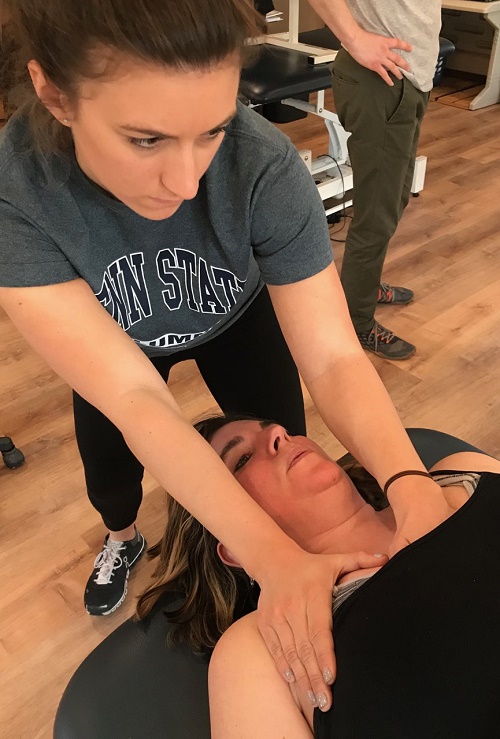
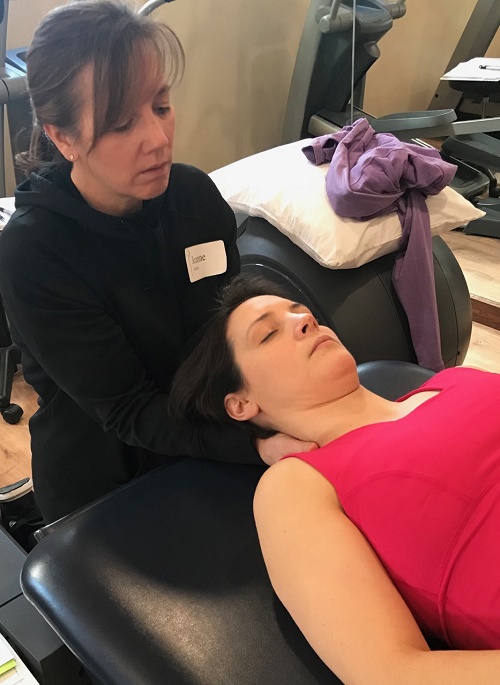
There probably is not a place on the body that I want to put my hands and eyes on more than the neck. It tells me so much about the neurologic state of the body, the position the body resides, the pattern of respiration placed on the thoracic diaphragm and the anterior neck muscle, the appendicular compensatory probability, the demands placed on dental occlusion, the manner of visual and auditory processing, the pharyngeal airway limitation and the voice habilitation existence. Our character and personality is refined and reflected by our cervical function, or lack of.

Quite frankly, I can look at someone’s neck and become oriented to their orientation and probable individual needs for and from Postural Restoration integration and application. Our synergistic patterns of behavior are defined by the dimension and displacement of the vessels and their lumens and the string-like fiber of muscle, tendons, fascia, and nerves of the neck.

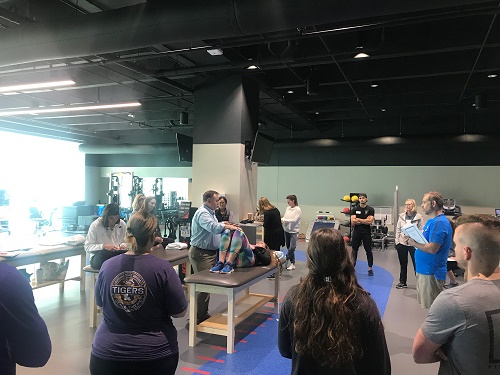
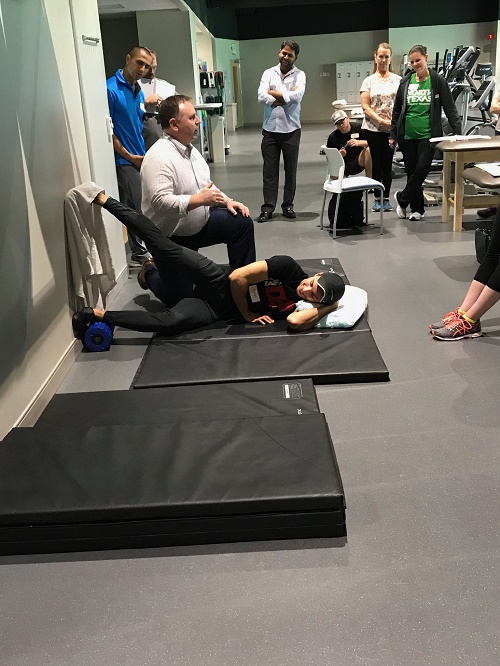
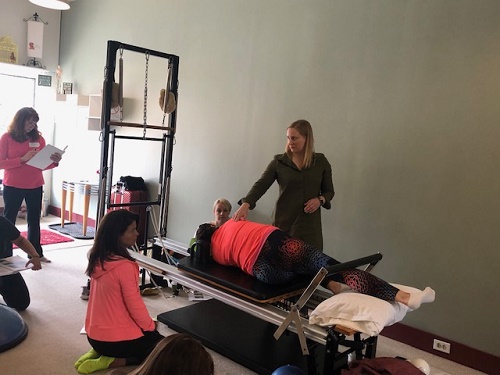
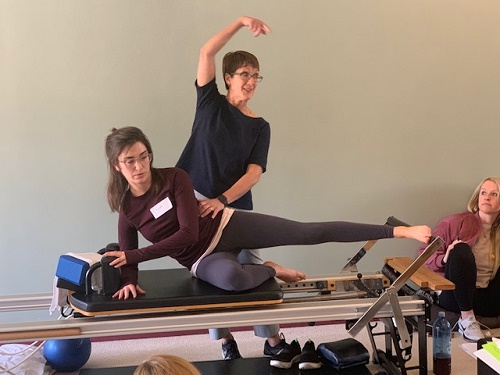
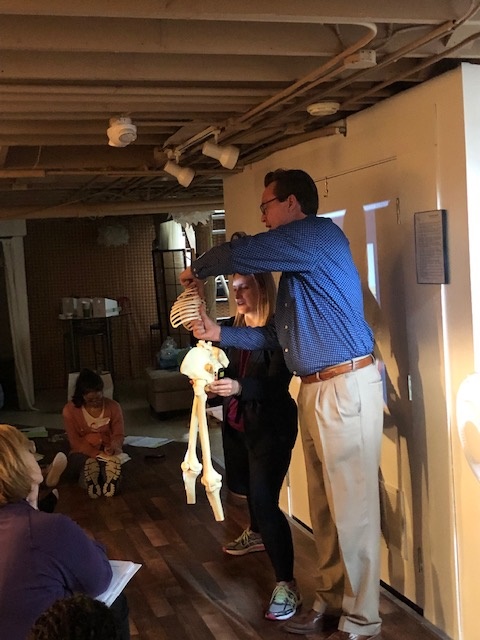
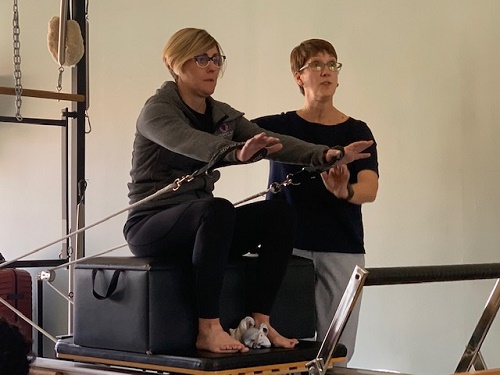
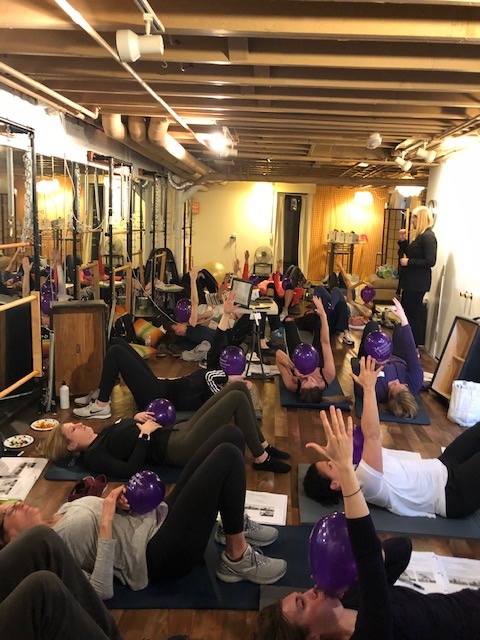
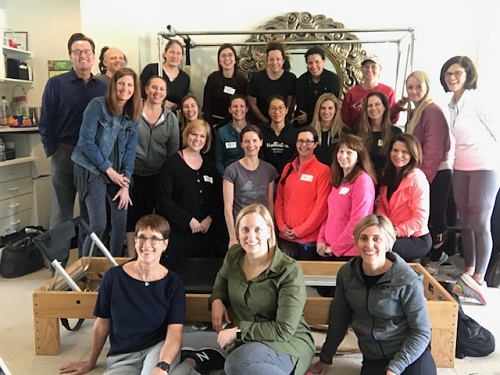
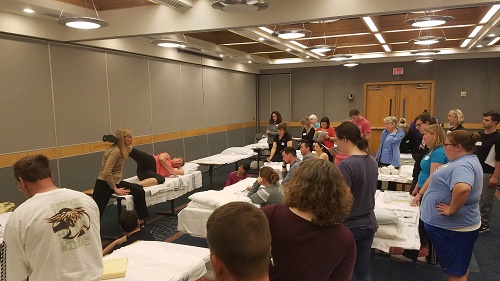
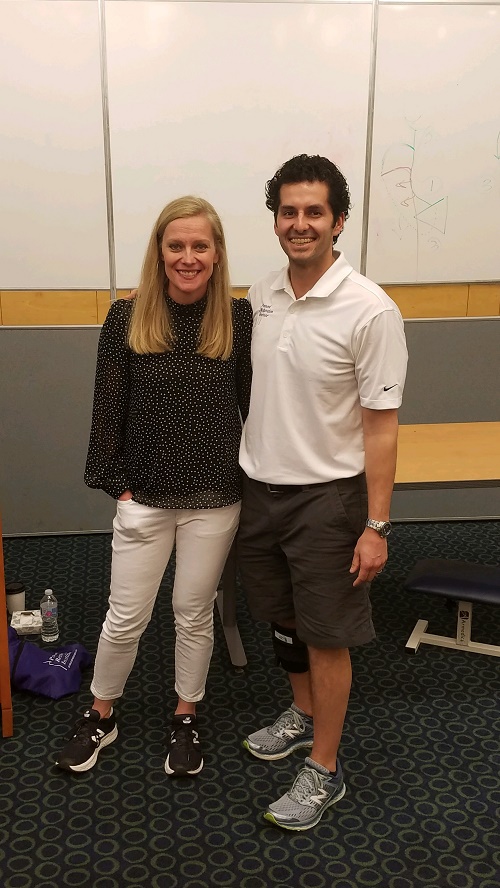
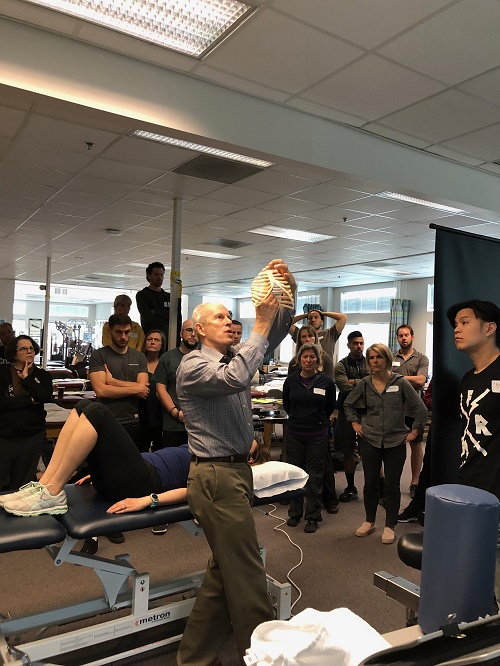
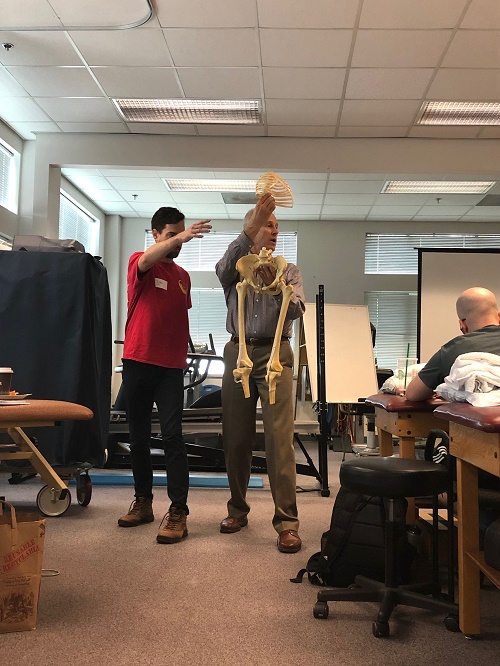
Last weekend’s instruction and interaction with Skip George DC, PRC, who will be teaching this class with me on April 27-28 in Holland Michigan, allowed us to fully examine patterns of functional behavior that corresponds with limitations of cervical lateral flexion and axial rotation. I want to thank Alicia Ferriere DPT, PRC, Darlene Kalinowski PMA-CPT, Laura Paley PT, DPT, Yohei Takada DPT, CFMT, OCS, SCS, CSCS, Catherine Coelho PT, and Daniel Buron MS, CSCS for helping out with lab demonstration and class participation. I always enjoy having Michael Zhao BS, CSCS in my classes. His brain-centric view of the importance of including physiological, environmental and biologic political determinants in assessing synergistic patterns of behavior enlightens me. Thank you Michael for your ongoing participation and attendance after taking 17 PRI courses. Lastly, thank you to Finish Line Physical Therapy for your ongoing support of PRI and continuing to host several courses a year in NYC, my home away from home. 

I am excited to introduce "The Postural Restoration Podcast" with #PRINation! Many of you may be familiar with our featured interviews, and you may have even been highlighted on one in the past. We will now be using this Podcast for our Featured
Interviews
as a way to better familiarize the general public with not only our Faculty but also our Certified Providers. Check out the description of the first episode below, and I promise that not every episode will be this lengthy!

PS. Make sure to check out the History of PRI – The Foundation of the Postural Restoration Institute (August 2008) written by Ron in 2008, to discover how far we’ve come over the past decade!

Episode 1: The Foundation of the Postural Restoration Institute

"Welcome to the first episode of the Postural Restoration Podcast! In this Episode, I am joined by Founder and Director of the Postural Restoration Institute, Ron Hruska. The foundation of the Postural Restoration Institute resulted from many years of Clinical Practice and a strong interest in the patterns and positioning that at the time seemed to be the cause of many patients’ pain and dysfunction.

Ron discusses his time in Graduate school pursuing a Master’s in Public Administration after receiving his Physical Therapy degree from the University Of Nebraska Medical Center. His time working at the V.A. Medical Hospital as well as his eventual role as Director of Physical Therapy at St. Elizabeth’s Hospital in Lincoln, NE both played roles in his desire to look at and treat the human body through a multidisciplinary, systematic approach.

This led Ron to create other ways of treating patterned dysfunction, initially through the use of the first “Re-Positioning” device called Protonics. Although Protonics looked and seemed to function to many in the orthopedic world as a Patello-Femoral “Brace”, it was actually much more. Using this device allowed him to "Re-Pattern” bi-lateral chains of muscle and look at orthopedics from a Femoral-Patella lens.

Eventually this device left Ron with the desire to move into the private practice setting, in order to dedicate more time to roles with the APTA Association, and more time dedicated to learning and discovering further ways to develop his ideas. Protonics allowed him to connect with and teach other clinicians, including some of the first PRI Faculty members. Following the creation of the Hruska Clinic, Restorative Physical Therapy Services in 1999, Ron worked with fellow Physical Therapist Jason Masek and others to create some of the earliest PRI Non-Manual Techniques.

As this science continued to grow, PRI Director Janie Ebmeier was put in charge of helping to develop what would become the first Postural Restoration course which would later be renamed to “Postural Respiration”. With the foundation of the Postural Restoration Institute in 2000, other courses including the "Influence of the Pelvic-Femoral Complex" which was later called Myokinematic Restoration was a quick addition. We now are proud to offer more than 15 different courses, which have been developed to build upon these three Primary Courses

I welcome you to join us on this journey as we continue to explore how the creation of this science has changed the way coaches and clinicians approach the treatment of the human body."

The Postural Restoration Podcast
 

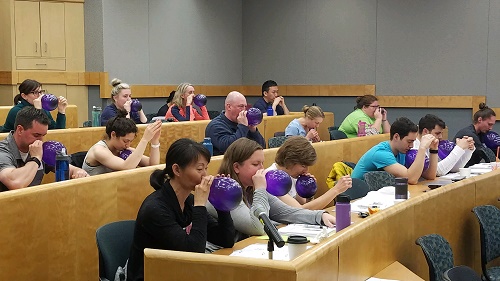
We were excited to see a newly published article this past week titled "Effects of Two Different Recovery Postures during High-Intensity Interval Training". This study was performed at Western Washington University, and includes PRC therapist Wren McLaughlin as one of the authors. While on faculty at Western Washington University, Wren was instrumental in sharing some PRI concepts with her colleagues and students. This study examined the effects of two different recovery postures, hands on head (HH) and hands on knees (HK) as a form of immediate recovery from high-intensity interval training. The researchers wanted to explore the effects of maximizing a diaphragmatic zone of apposition (ZOA) through a flexed spinal posture (hands on knees) rather than an extended posture (hands on head), during recovery breathing.

The results of their study indicated that the hands on knee posture significantly improved HR recovery, tidal volume, and carbon dioxide elimination in comparison with the hands on head posture. Thank you Joana, Lorrie, David, Wren and Dylan for your work on this study, and for publishing these results for the world to see. You have provided such valuable data that will hopefully result in a new recovery position (and a deeper understanding of its benefits) for clinicians, coaches, athletic trainers, strength and conditioning coaches, personal trainers, and athletes around the world!

I spent my February 20th to the 22nd in Chicago at the American Equilibration Society. A long-standing congress that found me surrounded by about a thousand dentists. A convention that caused me to realize that I had come to the right place. Elizabeth Caughey DDS, with whom I work, implored me to come and…learn. Multiple topics were covered including: bruxism and sleep disordered breathing, occlusion and TMD, mentoring (a strong Ron Hruska point), pediatric airway orthodontics and I even heard a physical therapist speak of PT and TMD! Multiple topics moved my learning forward and caused me to repeat the phrase that I’ve said many times: my learning will never stop. I have no doubt that PRI will one-day be on the docket at this fantastic convention and until then I will continue to expand my learning. Thank you to Ron Hruska for compelling me to get out there and take courses “outside the box” of PRI. I am strengthened and I am excited.

After much deliberation the new 2019 Hruska Clinic Shoe List is available for anyone who is interested in seeing how we look at shoes and how they can influence a PRI program.  We feel footwear is an important factor for a lot of patients, especially those struggling to progress through an upright PRI program. Feel free to use the list as you would like, but please keep the name "Hruska Clinic" on the list.

To get a copy of the list and to watch a video from Lori Thomsen, PT, PRC which describes a little about the history of the list, some tips for patients and for PRI practitioners, as well as some good information on several of the shoes that have changed on the list, check our website HERE.  Feel free to contact us if you have any questions!

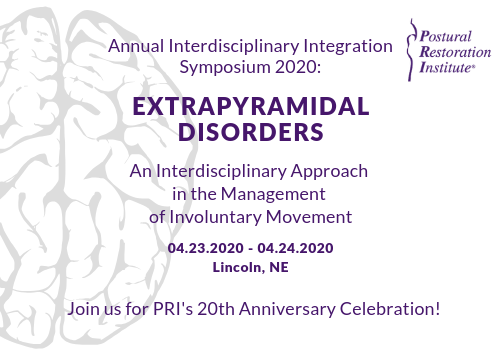
Every time I see, say or hear the word ‘airway’ I think ‘oscillation’, and every time I see, say or hear the word ‘oscillation’ I think ‘airway’.  Therefore, you can probably imagine how excited I am for the upcoming Interdisciplinary Integration Symposium and for the opportunity to engage with all the speakers who have dedicated their professional lives to these two words. 

A recent article in The New Yorker (February 11, 2019), written by Burkhard Bilger describes our orchestration inside of us.  His first two paragraphs of ‘Extreme Range’ sent me over my edge of containment…

“In a throat, a note is forming.  A puff of air, a pulse of the lungs, rushes up the windpipe and through the vocal cords, parting them like a pair of lips.  As the cords begin to vibrate, they’re stretched taut by muscles to either side, raising the pitch.  The diaphragm pumps more air, rocketing the note up the vocal tract, making its walls hum like the barrel of a woodwind.  The sound ricochets back and forth as it rises, gaining resonance with each rebound, till it bursts into the hollow chamber of the mouth, the ringing cavities of the sinuses, and careens off the palate into the open air.

The human voice is the world’s most astonishing instrument, it’s often said.  It’s capable of everything from a trill to a bark to an ear-splitting scream, from growling harmonics to liquid acrobatics, lofted on the breath like a lark on an updraft.  Instrument is the wrong word, really.  The voice is more like a chamber ensemble: winds and strings and blaring horns, strung together end to end.  It’s a pump organ, a viola, an oboe, and the bell of a trumpet, each instrument passing the sound along to the next, adding volume and overtones at every step.  Throw in the percussion of the lips and tongue, and the echoing amphitheater of the skull, and you have a full orchestra playing inside you.”

Over the next few weeks, I will highlight each of our six orchestrated speakers and presenters, and how their ‘Approach to the Production of Voice, Airflow, and Resonance Frequency Breathing’ strengthens our sense of self and self-satisfaction.  Postural satisfaction requires intimate integrated oscillation from our vocal cords, neck musculature, throat or airway and occiputs.  Highlighting is something I do with every article, book or journal I read.  I look forward to every one of our Spring Symposiums, but this year it will be hard to contain my excitement between now and one of the biggest highlights of my year.

Coming from the Polar Vortex, it was a refreshing respite to be in sunny Arizona for the first Myokinematic Restoration course of 2019. We were fortunate enough to have a very diverse class of attendees ranging from chiropractors, to strength coaches, to physical therapists working in various settings, to certified athletic trainers working with professional athletes.

Myokinematic Restoration is a fantastic course to kick-start one’s PRI journey. This was the rare introductory course where over half of the attendees had been to previous PRI courses. This provided us a unique opportunity to delve into other material that we wouldn’t otherwise be able to cover. We had excellent questions and excellent lab time as a result.

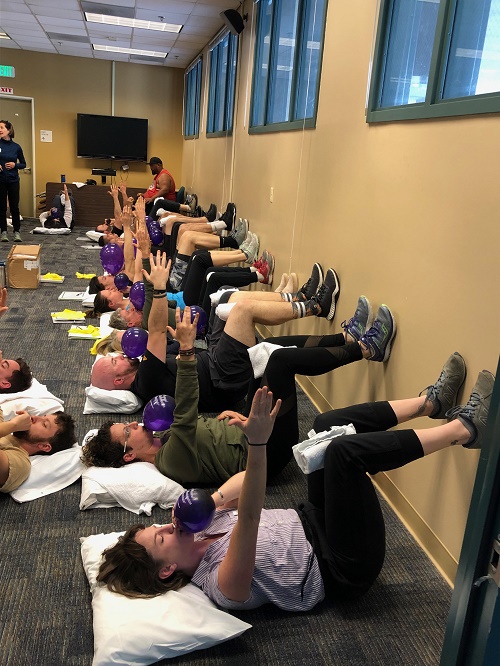
Lab Demonstration of PRI Testing, Myokinematic Restoration, Chandler, AZ

One of the topics that we were able to cover in this course that previous attendees appreciated was the Hruska Abduction Lift Test. This test is taught in depth in Pelvis Restoration as well, but for those who had attended Myokin previously, this was a new topic for them. Additionally, it provided the newcomers a chance to be able to appreciate how PRI integrates the gait cycle and breathing into treatment from beginning to end. We were also able to briefly touch on other topics, such as PEC management and rib cage IR, because of the previous experience of many of the attendees. However, we were also able to stay very on point and keep the course on track for those who were attending for the first time.

Dan Houglum demonstrating the Hruska Abduction Lift Test, Myokinematic Restoration Course

My thanks to Jim Wittekind, PT, PRC, for his help during lab and insightful discussion. The staff from 360 Physical Therapy, Becky Fox, Jennifer Peters, Krystina Leal, Caleb Walls, and Jason Roe, were perfect hosts. My thanks to Nathan Whitney, Ginsie Huntley, Liz Cash, Chris Burke, and Garrett Chin for their questions and discussion.

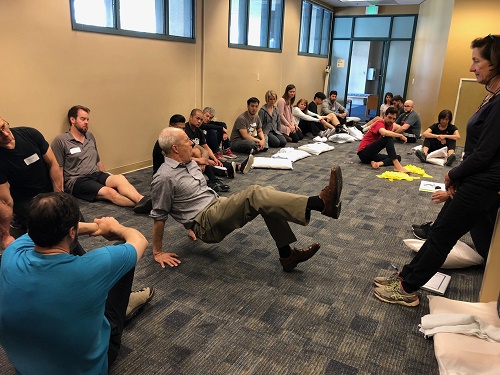
Lab Demonstration, Myokinematic Restoration course, Chandler, AZ

At the end of the day, we all need to be a little more like Bruce Wayne, and less like Batman. And we need to use our "good boy band" of muscles, instead of the "bad boy band" that the L AIC often puts us into. As a result of our conversation around normal mechanics vs. compensatory mechanics relative to the L AIC pattern, we were able to delve into how these analogies applied to our assessments and treatment approach. We were able to spend a lot of time on muscle activity as well as how to apply the Hruska Abduction and Adduction Lift tests into assessment and PRI non-manual activity selection.

Hruska Abduction Lift Test, Myokinematic Restoration Tweet

We were blessed with a great group of movement professionals, and I was fortunate to be able to help them either continue or start their PRI journey. Thanks for a great weekend!

What a great way to start off teaching my first course of my 2019 schedule at my own clinic here in Southern Pines! Nothing like sleeping in your own bed and walking your dogs at lunch time! I had the help of Sarah Ratti PTA, PRC! Sarah was a member of the 2018 PRC class and I was lucky enough to get to know her in December and have her help during lab!

Sarah Ratti and Jennifer Poulin at the Pelvis Restoration Course

 I was so excited to teach Pelvis Restoration following attending Ron’s Non-manual technique workshop last weekend in Lincoln, NE. I learned so much and it certainly help energize my teaching and deeper understanding of the Non-manual techniques! I was able to really help my course attendees with choosing techniques and following a frontal plane progress as it relates to the Pelvis.

Jennifer Poulin Instructing a PRI Non Manual Technique

Every time I teach this course, I learn more and grow not only as a faculty member, but also as a clinician. I am hopeful my course attendees would feel the same. My class was interdisciplinary! We had PT’s, PTAs, massage therapist, kinesiologist, strength and conditioning coaches, Yoga Instructors and massage therapists! It was a 50/50 split of newbies and experienced PRI clinicians. Maude and Brenda were my Pure Newbies, meaning they really didn’t know what PRI was all about. But they left excited that they had been exposed to the science and couldn’t wait to integrate what they learned into their current practice. I was happy to have Malynda Kerksick in my class. Malynda was a former patient of mine and now a PRI enthusiast!

I have had the pleasure of watching her grow as a Yoga instructor and her questions were much appreciated. She also did a great job photographing moments throughout the weekend. She gets photo cred for capturing my pure joy while teaching this weekend. I am so proud to be a part of the growth of Postural Restoration. We get asked all the time which course should I take next? What is the best first course to take? I made sure to emphasize the true nature of feed-forward neurology. You treat a pelvis, you influence the thorax, neck, head and big toe! I hope to see these faces again in a future PRI course! The #PRINation is now stronger than ever before!

Pelvis Restoration Course, Non Manual Technique Demonstration

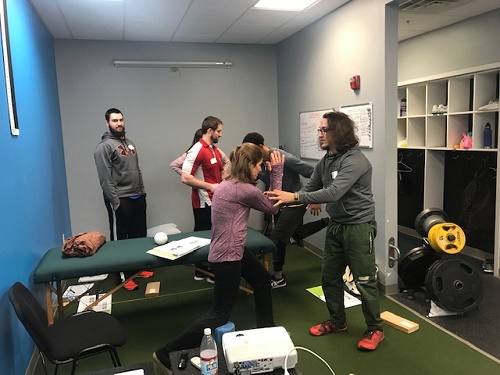
Pelvis Restoration Lab Demonstration

A few days before this course, I was reviewing the material and made a remark to Jen Platt on how much “good” stuff is in this course, that I forget about from year to year. It is so enjoyable to have an opportunity to discuss the reasoning one might use before selecting a position to place a client or patient in, before selecting a non-manual technique. What went into the thought processing regarding reference centers and concepts and why is it important to select an appropriate primary reference for desirable “referent” behavioral outcomes? 

Ron Hruska demonstrating a Non-manual Technique with Neil Rampe

Results are based on preparation. Preparing the patient on what to be mindful of, sense, possibly expect, experience, etc. are all more important than making sure they are doing the technique “correctly”. Processing information can be difficult if individual centers of tactility are not explored first. Words matter, word placement matters, word meaning matters, word correlates matter, word integration matters and word synchrony matters. 

Ron Hruska Non Manual Techniques Workshop

This course allows me to review this communication process, inhibitory intensity and neurologic effort for those who have unique limitations but very similar outcome needs, relating to pattern development around asymmetrical design. Over twenty different non-manual techniques, many of which were selected by the attendees, were reviewed, torn apart, discussed, re-designed and then re-designed again, to recognize reliability of approach and validity of use. It is personal for me. And therefore, an opportunity for those who share their transparencies to reap “good” stuff.

Ron Hruska Non-Manual Technique

Mizzou Therapy Services located at the Missouri Orthopaedic Institute hosted it’s first PRI course, Postural Respiration, this past weekend in a beautiful state-of-the-art facility. What made this weekend significant was that nearly two thirds of the attendees were from Mizzou Therapy Services or new to PRI. This holds the promise of a great opportunity for these therapists to collaborate, practice and potentially master the manual and non-manual PRI techniques taught this weekend.

This is the first time this instructor has taught a course with so many participants from the same facility and the energy and enthusiasm from these talented therapists was inspirational! Since most of the class was new to PRI and attending their first course, PRI principles were broken down in detail to provide a solid foundation to a brand new paradigm. Many of the therapists immediately saw the value of Postural Respiration with working with their COPD patients, athletes from the University of Missouri as well as geriatric populations.

Postural Respiration has been updated and revised just this year and Posterior Mediastinum could be another name for this course. Patterns, position and posture of the diaphragm affecting every vital system in the body were defined and explored this weekend. Columbia, MO is a great college town and has tradition at their sports games from their fans. On one side of a group of fans they will shout " M-I-Z" followed by the other group answering "Z-O-U!" for MIZZOU! This weekend the therapists at Mizzou Therapy Services have a new chant which is "M-I-Z" —"Z-O-A!" for the new awareness of "Zone of Apposition" as described in Postural Respiration!

Many thanks to Joe Pope, PT, PRC for driving in from Eldon, MO to assist. His expertise and skill at describing and expanding on PRI principles and his lab assistance was invaluable. Joe is thoughtful and articulate with his responses and patience. Thank you to all of the staff at MTS including Lindsey, Laura, Mackinzie, Barbie, Katie and all others that helped to organize and clean up at the end of the day. Your energy and assistance with providing such a great facility was much appreciated.

Having the opportunity to discuss the role of the hypothalamus and integrated thalamic function as they relate to autonomic patterned respiration, physiology, posture and central nervous system compensation, was an enduring dream of mine. I could finally, deliver a course that describes how our autonomic and central nervous systems operate with and from  biased cerebral and cerebellum lateralization, hemispheric specialization, and oscillatory compression and decompression.

Ron Hruska demonstration during Cranial Resolution in Seattle

Over two decades of literature review, clinical application, multi-disciplinary experience and evidence based outcome methodology, built with the help of an Institute I started for these course objectives, fulfilled me in ways that are very difficult to express. I trusted an idiosyncratic educational process that challenged me as a pre-dentistry student. A clairvoyant process that required collegiate patience, faith in humanity and belief in our holistic, biological and neurological system. I appreciated the 41 course ambassadors who also trusted this process. I hope they came away with a sense of how we patterned humans resolve to make sense of what we don’t sense through pattern compensation of air flow, fluid movement, and cavity fluctuation as it relates to ischial and occipital (sacral and cranial) rhythm and thus autonomic processing. 

Christopher Murphy at Cranial Resolution, Alpine Physical Tehrapy

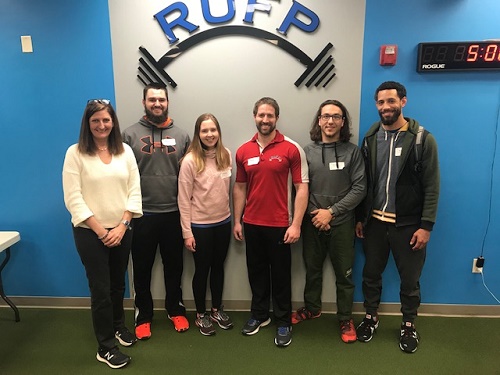
Cranial Resolution Course Attendees, Seattle, WA

This course was strengthened by the input and participation from too many people to list here, but I especially appreciated the support from Erin Coomer DPT,OCS, Laurie Gribschaw PT,DPT,ATC,AT/L,PRC,  Janine Peacock DPT,OCS, Paige Raffo MPT,OCS and Kelly Martin PT.  I could not have asked for a better audience and support group.   There were many reasons I wanted to give this first course in Seattle but three of those reasons are Christopher Murphy DPT,OCS,PRC,  Jeremiah Ferguson DPT,OCS,PRC, and Eli Zygmuntowicz DPT,OCS,PRC. These three men are absolutely the embodiment of family. I will always be grateful for their warmth, charismatic charm and pedagogical approach. I had so much fun and look forward to the next opportunity to talk about pendular parasympathetic process. 

Alpine Physical Therapy

Jen and I had the pleasure of returning to the APTA Combined Sections Meeting this year in Washington, D.C. Years past have provided us great discussions with both Physical Therapists and Physical Therapy Assistants as well as Students who are seeking these professions. This year once again proved the value of our attendance and allowed us to inform many individuals interested in the science of Postural Restoration. It is so re-assuring and invigorating to be able to discuss our science with those who may not have been exposed prior to attending.

The Combination of both PT students and seasoned Physical Therapist’s provided a myriad of conversations and allowed us to connect with both sides of the spectrum. Many faculty members from various institutions and organizations asked passionately about our science and wanted to be better at introducing it to their students. Many students asked passionately about finding a PRI Clinician in their area for mentorship and clinical experience as they complete schooling. Interests in specialization areas continues to grow and we were excited to discuss our Affiliate programs in Pediatrics, Geriatrics and all others with those who find interest in these populations.

Shortly after a discussion regarding our PRI Integration for Fitness and Movement course we were surprised to see a familiar face come across our booth! Little did we know Julie Blandin was in attendance and literally ran into us amongst the crowd. What a great surprise!

Although running into a PRI faculty member was unplanned, we were lucky to have several PRC’s and PRT’s reach out to us as they learned of our stay in the area. On day 2 of the conference we received another surprise as our dear friend and PRT Navin Hettiarachchi sent us a text. “I don’t know how but I have found 3 tickets for you to tonight’s game!”, we had discussed possibly meeting up with Navin but due to the Golden State Warriors coming to town we all thought it would be difficult to find tickets. Although we loved our first NBA experience it was perhaps more fun to see Navin in action with the team. He is a true gift to any organization, as his smile is infectious and his care for his players is unmatched. They are lucky to have him and we are lucky to call him our friend and have him in our PRI Family.

We were also able to meet up with PRC Heather Carr, who has been part of the PRI Family for many years. It was great to see her and to meet her husband Jan, as they provided us with local recommendations and things to see. Heather continues to introduce PRI to many others and we are so grateful for her support. Our last evening included a dinner reservation with PRI Faculty Louise Kelly and her husband Bruce and it was such a great way to finish our weekend. Bruce and Louise met in graduate school and it was a true pleasure to take a walk down memory lane with both of them. Although the food was great the conversations shared and laughs that were had truly made our last night in DC special.

Thank you to all everyone who made this conference a success. The science of PRI continues to grow and each conference we attend makes it apparent that word of mouth is still one of the best ways to connect and share our passions with others. Thank you in particular to Navin, Heather, Julie and Louise for going out of your way to spend time with us. PRI has a way of connecting people and it was great re-connecting with each of you!

Subscribe to our Newsletter