

For the last several years, PRI has been invited to present courses in Munich, Germany. This year, it was an honor to present Impingement and Instability as well as Forward Locomotor Movement on consecutive weekends to a very eager group of movement professionals.
Given that I&I and FLM are Secondary and Tertiary level courses, our groups were small, but our questions and dialogue during the courses were very robust. The amount and quality of the questions these groups posed during the courses indicated that, despite the blazing heat of 100 degrees during the courses, their capacity to retain and process higher level information from these courses was on point.
It was a humbling experience to interact with so many movement specialists from other parts of the world who are very much in-tune and on-board with the science of PRI. The world is a big place, yet it was a very familiar place to be surrounded by like-minded professionals.
My thanks to everyone who made the trip to Munich, and my thanks to Daniel and the Lindenberg staff for their hospitality and desire to know more about the science behind and application of PRI. I look forward to continuing PRI’s relationship and growing outreach to Europe and beyond!
- Dan Houglum
Jul 22

For the last several years, PRI has been invited to present courses in Munich, Germany. This year, it was an honor to present Impingement and Instability as well as Forward Locomotor Movement on consecutive weekends to a very eager group of movement professionals.
Given that I&I and FLM are Secondary and Tertiary level courses, our groups were small, but our questions and dialogue during the courses were very robust. The amount and quality of the questions these groups posed during the courses indicated that, despite the blazing heat of 100 degrees during the courses, their capacity to retain and process higher level information from these courses was on point.
It was a humbling experience to interact with so many movement specialists from other parts of the world who are very much in-tune and on-board with the science of PRI. The world is a big place, yet it was a very familiar place to be surrounded by like-minded professionals.
My thanks to everyone who made the trip to Munich, and my thanks to Daniel and the Lindenberg staff for their hospitality and desire to know more about the science behind and application of PRI. I look forward to continuing PRI’s relationship and growing outreach to Europe and beyond!
- Dan Houglum
We knew it, we knew you……..
Every year we are blown away by your passion for applying PRI to unique circumstances, cases, clients and communities. And we are so grateful you share it with us!
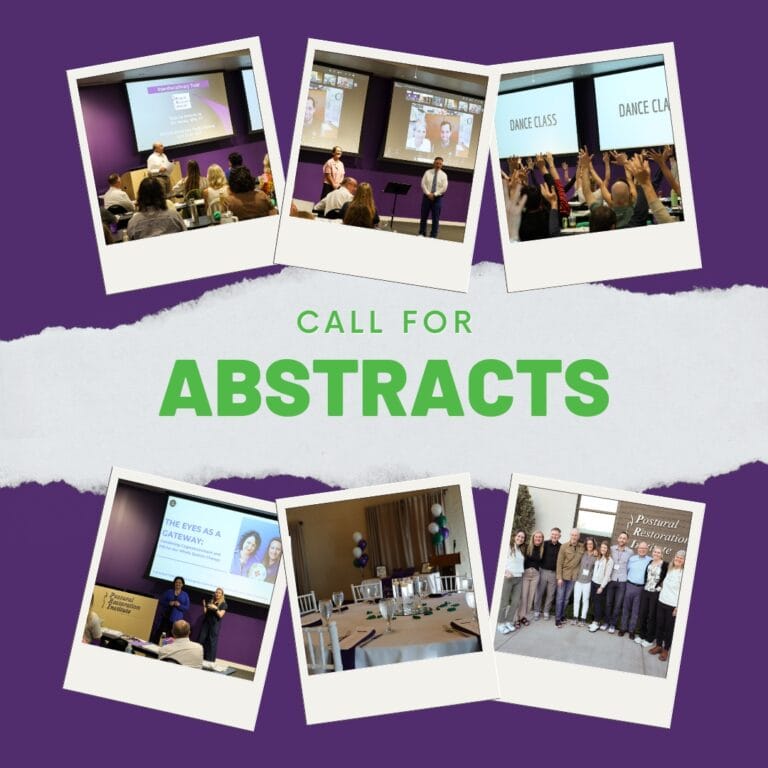
We need people like YOU to submit an abstract for next years Interdisciplinary Studies Summit by July 15th!
We knew you’d be great!
#linkinbio
Jun 19
We knew it, we knew you……..
Every year we are blown away by your passion for applying PRI to unique circumstances, cases, clients and communities. And we are so grateful you share it with us!
We need people like YOU to submit an abstract for next years Interdisciplinary Studies Summit by July 15th!
We knew you’d be great!
#linkinbio
Their love for PRI was just the beginning!
In this episode Danielle and Eric Phillips share how this science not only brought two strangers together but also how it shaped their desire to evaluate and treat the humans they work with.
As the team behind @untappedlouisville their story is far from over. As Kentucky’s first Postural Restoration center they continue to share their passion for this science together within their community as a whole.
Whether hosting courses, seeing clients or continuing to learn PRI at the highest level, these two truly are a PRI power couple!
Jun 16
Their love for PRI was just the beginning!
In this episode Danielle and Eric Phillips share how this science not only brought two strangers together but also how it shaped their desire to evaluate and treat the humans they work with.
As the team behind @untappedlouisville their story is far from over. As Kentucky’s first Postural Restoration center they continue to share their passion for this science together within their community as a whole.
Whether hosting courses, seeing clients or continuing to learn PRI at the highest level, these two truly are a PRI power couple!
I had an amazing weekend in Edmonton Alberta this past weekend teaching Myokinematics of the Hip and Pelvis. We explored concepts of the left AIC pattern and common compensations that we human’s do to function in an upright pattern of movement. We discussed how the pattern affects position of the hip and concepts of Acetabulum on Femur and Femur on Acetabulum. Ligaments that become overlengthedi or shortened in this pattern were evaluated with PRI testing.
Thank-you to Marlyn and her husband to treating us to dinner on Saturday evening! Alberta Beef was Amazing! When in Rome you visit the Vatican, when in Alberta, you eat the Beef! On Sunday, we had a surprise guest! Ron and his wife Robin were vacationing at the same time in this region and they came by to meet our group. Ron spent a “few minutes” talking to the group about concepts of upright patterned movement, behavioral movement bias, anatomical positioned bias and how we don’t treat patients, they treat themselves! What a great way to start Day 2 using the Hruska Adduction Lift test to help us made good clinical decisions for our patients and clients in a systematic approach.
Thank-you to Marlyn for being persistent and getting a group together to further PRI in your region. I so enjoyed my time with this group. Thanks to Robin for taking good care of me and bringing me lunch on Sunday. So glad I mentioned I love Pierogies! These course attendees were a special group and I hope to be back in the coming years to teach again.
- @jenpoulinpt
Jun 11
I had an amazing weekend in Edmonton Alberta this past weekend teaching Myokinematics of the Hip and Pelvis. We explored concepts of the left AIC pattern and common compensations that we human’s do to function in an upright pattern of movement. We discussed how the pattern affects position of the hip and concepts of Acetabulum on Femur and Femur on Acetabulum. Ligaments that become overlengthedi or shortened in this pattern were evaluated with PRI testing.
Thank-you to Marlyn and her husband to treating us to dinner on Saturday evening! Alberta Beef was Amazing! When in Rome you visit the Vatican, when in Alberta, you eat the Beef! On Sunday, we had a surprise guest! Ron and his wife Robin were vacationing at the same time in this region and they came by to meet our group. Ron spent a “few minutes” talking to the group about concepts of upright patterned movement, behavioral movement bias, anatomical positioned bias and how we don’t treat patients, they treat themselves! What a great way to start Day 2 using the Hruska Adduction Lift test to help us made good clinical decisions for our patients and clients in a systematic approach.
Thank-you to Marlyn for being persistent and getting a group together to further PRI in your region. I so enjoyed my time with this group. Thanks to Robin for taking good care of me and bringing me lunch on Sunday. So glad I mentioned I love Pierogies! These course attendees were a special group and I hope to be back in the coming years to teach again.
- @jenpoulinpt
Time is running out! Register now before it’s too late to join us in Germany!
Manuals are being printed, Dan is headed to Deutschland and we can’t wait to see #prination in two weeks!
Jun 5
Time is running out! Register now before it’s too late to join us in Germany!
Manuals are being printed, Dan is headed to Deutschland and we can’t wait to see #prination in two weeks!
The PRI Credentialing Scholarship Deadline is two weeks away! If you are interested in applying for this FULL scholarship towards either PRC or PRT credentialing, please submit your essay by June 15th!
The PRI Credentialing Scholarship is available to candidates who may otherwise be dissuaded from applying for PRC or PRT credentialing solely by their current financial circumstances. Candidates must be eligible to submit an application for PRI Credentialing this year.
In your essay, please share your story of how you got to where you are (i.e. how you became interested in PRI, do you have any mentors or colleagues supporting you on this education journey, etc.), your current professional and financial situation, what PRI credentialing means to you, and why you feel you are deserving of the scholarship. If you are interested in applying for this scholarship, please email your essay to platt.jennifer@posturalrestoration.com, no later than June 15th.
Essays will be reviewed by the Board of Directors, and the scholarship recipient will be notified by July 15th. If the recipient does not accept the scholarship and complete the credentialing application and testing that year, the scholarship will be awarded to an alternate. Depending on the number of applications received this year, the Board of Directors may select more than one scholarship recipient.
Jun 1
The PRI Credentialing Scholarship Deadline is two weeks away! If you are interested in applying for this FULL scholarship towards either PRC or PRT credentialing, please submit your essay by June 15th!
The PRI Credentialing Scholarship is available to candidates who may otherwise be dissuaded from applying for PRC or PRT credentialing solely by their current financial circumstances. Candidates must be eligible to submit an application for PRI Credentialing this year.
In your essay, please share your story of how you got to where you are (i.e. how you became interested in PRI, do you have any mentors or colleagues supporting you on this education journey, etc.), your current professional and financial situation, what PRI credentialing means to you, and why you feel you are deserving of the scholarship. If you are interested in applying for this scholarship, please email your essay to platt.jennifer@posturalrestoration.com, no later than June 15th.
Essays will be reviewed by the Board of Directors, and the scholarship recipient will be notified by July 15th. If the recipient does not accept the scholarship and complete the credentialing application and testing that year, the scholarship will be awarded to an alternate. Depending on the number of applications received this year, the Board of Directors may select more than one scholarship recipient.
“I do not treat patients…………The only person who can treat that patient, is that patient. Our role is to guide that shifting, guide that force, guide that activity, so that we have less problems tomorrow.”
Occlusal Cervical Restoration
Day 1
May 29
“I do not treat patients…………The only person who can treat that patient, is that patient. Our role is to guide that shifting, guide that force, guide that activity, so that we have less problems tomorrow.”
Occlusal Cervical Restoration
Day 1
We are excited to announce that we once again have CEU approval from the National Strength and Conditioning Association (NSCA) for the Myokinematic Restoration home study and Postural Respiration home study courses. And will be applying for CEU approval for the Pelvis Restoration home study course soon!
The CEU approval information for the home study courses is outlined below.
Myokinematic Restoration Home Study Course
The National Strength and Conditioning Association has approved 1.9 CEU(s) in category C for certified individuals who successfully complete the Myokinematic Restoration home study course. Approved activity code: J1072-HSMYR. Approval valid January 1, 2026 – December 31, 2026.
Postural Respiration Home Study Course
The National Strength and Conditioning Association has approved 1.2 CEU(s) in category C for certified individuals who successfully complete the Postural Respiration home study course. Approved activity code: J1072-HSPR. Approval valid January 1, 2026 – December 31, 2026.
Live PRI courses can be submitted to the NSCA in the non-approved category!
May 27
We are excited to announce that we once again have CEU approval from the National Strength and Conditioning Association (NSCA) for the Myokinematic Restoration home study and Postural Respiration home study courses. And will be applying for CEU approval for the Pelvis Restoration home study course soon!
The CEU approval information for the home study courses is outlined below.
Myokinematic Restoration Home Study Course
The National Strength and Conditioning Association has approved 1.9 CEU(s) in category C for certified individuals who successfully complete the Myokinematic Restoration home study course. Approved activity code: J1072-HSMYR. Approval valid January 1, 2026 – December 31, 2026.
Postural Respiration Home Study Course
The National Strength and Conditioning Association has approved 1.2 CEU(s) in category C for certified individuals who successfully complete the Postural Respiration home study course. Approved activity code: J1072-HSPR. Approval valid January 1, 2026 – December 31, 2026.
Live PRI courses can be submitted to the NSCA in the non-approved category!
Pelvis Restoration is all about integration. Integration of pelvic inlets and outlets, a respiratory diaphragm with the pelvic diaphragm, and pressure control and position through two sides of a body. Integration was a fitting theme for the past weekend’s course in San Antonio at the University of the Incarnate Word.
We had five new attendees at their first PRI course, most of whom were attending as a result of integrating with other course attendees. We had seasoned PRI practitioners and those with the other primary courses under their belt who were integrating their understanding and appreciation for the course that connects Myokinematics and Postural Respiration.
One of the best groups I have had the pleasure of teaching in regard to their diligent use of lab time and questions around application of both tests and techniques. We were all fortunate to have the opportunity to view human asymmetry in situ in the adjacent cadaver lab.
A big thank you to our hosts, Reid Fisher, ATC, Joanna Soles, ATC, LAT, and Joseph Hernandez, ATC. A great facility with an ideal learning environment. My first time in Texas and it did not disappoint!
@jmillermtpt
May 21
Pelvis Restoration is all about integration. Integration of pelvic inlets and outlets, a respiratory diaphragm with the pelvic diaphragm, and pressure control and position through two sides of a body. Integration was a fitting theme for the past weekend’s course in San Antonio at the University of the Incarnate Word.
We had five new attendees at their first PRI course, most of whom were attending as a result of integrating with other course attendees. We had seasoned PRI practitioners and those with the other primary courses under their belt who were integrating their understanding and appreciation for the course that connects Myokinematics and Postural Respiration.
One of the best groups I have had the pleasure of teaching in regard to their diligent use of lab time and questions around application of both tests and techniques. We were all fortunate to have the opportunity to view human asymmetry in situ in the adjacent cadaver lab.
A big thank you to our hosts, Reid Fisher, ATC, Joanna Soles, ATC, LAT, and Joseph Hernandez, ATC. A great facility with an ideal learning environment. My first time in Texas and it did not disappoint!
@jmillermtpt
It has been 7 years since I was in Seattle at Alpine Physical Therapy and this location was the first time I “soloed” teaching Cervical Revolution in 2019. The “Three Amigos”, Jeremiah, Eli, and Chris always a most nurturing atmosphere for faculty members and students that provides a perfect learning environment for all. This weekend was no exception and attendees from first timers to veteran PRC’s were all in attendance for Cervical Revolution including PT’s, a DC, a DMD, strength and conditioning specialists and a soft tissue therapist. This group of students truly fit the term “non-denominational interdisciplinarians” who integrate PRI into their unique and varied professional practices.
One of the main focuses during this course was to establish a solid foundation of the basics of atlanto-occipital osteokinematics as it relates to not only the function of the cervical spine but how the cervical spine at A/O determines movement and position of a cranium and jaw. Since this course is also known as a right stance course, the “conjugate” integration with sacrum, sternum, and sphenoid is described. As a foundation we start with the Right TMCC pattern resulting in Right A/O flexion, Right cranial extension, Right sphenoid external rotation, Right temporal bone internal rotation, and Right mandibular protrusion to the left that all connect the cervical spine to the Left Side Bending Cranial osteopathic position. Then testing the cervical spine using five tests to determine neutrality, or not, was demonstrated in lab with non-manual techniques to not only establish neutrality but to ensure alternation was provided.
……….Cont in comments
May 20
It has been 7 years since I was in Seattle at Alpine Physical Therapy and this location was the first time I “soloed” teaching Cervical Revolution in 2019. The “Three Amigos”, Jeremiah, Eli, and Chris always a most nurturing atmosphere for faculty members and students that provides a perfect learning environment for all. This weekend was no exception and attendees from first timers to veteran PRC’s were all in attendance for Cervical Revolution including PT’s, a DC, a DMD, strength and conditioning specialists and a soft tissue therapist. This group of students truly fit the term “non-denominational interdisciplinarians” who integrate PRI into their unique and varied professional practices.
One of the main focuses during this course was to establish a solid foundation of the basics of atlanto-occipital osteokinematics as it relates to not only the function of the cervical spine but how the cervical spine at A/O determines movement and position of a cranium and jaw. Since this course is also known as a right stance course, the “conjugate” integration with sacrum, sternum, and sphenoid is described. As a foundation we start with the Right TMCC pattern resulting in Right A/O flexion, Right cranial extension, Right sphenoid external rotation, Right temporal bone internal rotation, and Right mandibular protrusion to the left that all connect the cervical spine to the Left Side Bending Cranial osteopathic position. Then testing the cervical spine using five tests to determine neutrality, or not, was demonstrated in lab with non-manual techniques to not only establish neutrality but to ensure alternation was provided.
……….Cont in comments
It was such a gift being in Boston this past weekend to discuss the gift of our rib cage and patterns of air flow.
I was fortunate to have the gift of very quality time with PRI legend Karen Taylor Soiles and experience her gift of knowledge, PT and PRI experience, her energy for a more positive, healthy future, as well as her overall infectious, vibrant aura. Karen was a gift to us all for being in the class and sharing her years of experience with everyone there. She will be a gift to the local Bostonian clinician community to mentor all of us on our PRI journey. To those near her - I do hope you take her up on her offer to mentor and learn from this amazing individual.
Everyone was very present for the two days as we unwrapped various patterns of airflow and ways to manage pressure through our amazing rib cage. We learned about various ways people may prevent death by utilizing accessory muscles of inspiration to help pull air in. While using scalenes and pec minors for inspiration may keep us alive, we may also be left with some mementos of dysfunction and discomfort.
The class attendees were simply remarkable this past weekend and I truly had an amazing experience. What a treat to be able to hang out with such special people working hard to advance their careers and enhance their interventions with their patients and clients.
You all were such a gift to me to get to know and spend time with. I really hope to cross paths with you all in the future!
- Craig Depperschmidt
May 19
It was such a gift being in Boston this past weekend to discuss the gift of our rib cage and patterns of air flow.
I was fortunate to have the gift of very quality time with PRI legend Karen Taylor Soiles and experience her gift of knowledge, PT and PRI experience, her energy for a more positive, healthy future, as well as her overall infectious, vibrant aura. Karen was a gift to us all for being in the class and sharing her years of experience with everyone there. She will be a gift to the local Bostonian clinician community to mentor all of us on our PRI journey. To those near her - I do hope you take her up on her offer to mentor and learn from this amazing individual.
Everyone was very present for the two days as we unwrapped various patterns of airflow and ways to manage pressure through our amazing rib cage. We learned about various ways people may prevent death by utilizing accessory muscles of inspiration to help pull air in. While using scalenes and pec minors for inspiration may keep us alive, we may also be left with some mementos of dysfunction and discomfort.
The class attendees were simply remarkable this past weekend and I truly had an amazing experience. What a treat to be able to hang out with such special people working hard to advance their careers and enhance their interventions with their patients and clients.
You all were such a gift to me to get to know and spend time with. I really hope to cross paths with you all in the future!
- Craig Depperschmidt
With advancements unfolding within the athletic training, sports performance and fitness industries and the growth of PRI across more disciplines, as well as internationally, we are excited to announce that we are expanding the Postural Restoration Trained™ (PRT) Credentialing Program to now include Personal Trainers, Pilates Instructors, Registered Yoga Teachers and more. All PRT applicants must also provide verification of completed Bachelor’s degree or higher degree.
When PRT Credentialing was originally established in 2011, it was a credentialing process that was created for Athletic Trainers and Certified Strength & Conditioning Coaches, bringing together collaboration within sports rehabilitation and performance. The Athletic Training profession has evolved over the past 15 years, and a Master’s Degree became the required entry-level credential for new Athletic Trainers in the United States in 2022. As a result of these changes, and with the expansion of the PRT Credentialing Program to include additional fitness-related certifications, Athletic Trainers and Athletic Therapists, as allied health professionals, are now eligible to apply for the Postural Restoration Certified™ (PRC) Credentialing Program, alongside PT’s, PTA’s, OT’s, OTA’s and Chiropractors. Athletic Trainers who completed PRT Credentialing in the past will have the option to be recognized as a PRC Credentialed Provider, after completing the Advanced Integration course (if that course has not already been completed).
We are excited about the opportunity to formally recognize more individuals, who share the passion and expertise for applying PRI knowledge and principles into their professional setting!
May 13
With advancements unfolding within the athletic training, sports performance and fitness industries and the growth of PRI across more disciplines, as well as internationally, we are excited to announce that we are expanding the Postural Restoration Trained™ (PRT) Credentialing Program to now include Personal Trainers, Pilates Instructors, Registered Yoga Teachers and more. All PRT applicants must also provide verification of completed Bachelor’s degree or higher degree.
When PRT Credentialing was originally established in 2011, it was a credentialing process that was created for Athletic Trainers and Certified Strength & Conditioning Coaches, bringing together collaboration within sports rehabilitation and performance. The Athletic Training profession has evolved over the past 15 years, and a Master’s Degree became the required entry-level credential for new Athletic Trainers in the United States in 2022. As a result of these changes, and with the expansion of the PRT Credentialing Program to include additional fitness-related certifications, Athletic Trainers and Athletic Therapists, as allied health professionals, are now eligible to apply for the Postural Restoration Certified™ (PRC) Credentialing Program, alongside PT’s, PTA’s, OT’s, OTA’s and Chiropractors. Athletic Trainers who completed PRT Credentialing in the past will have the option to be recognized as a PRC Credentialed Provider, after completing the Advanced Integration course (if that course has not already been completed).
We are excited about the opportunity to formally recognize more individuals, who share the passion and expertise for applying PRI knowledge and principles into their professional setting!
The weekend in sunny San Diego was one for the books teaching one of the gateway courses for new attendees, Myokinematic Restoration. @stretch_affect a local PT clinic and gym were our gracious hosts. The facility was top notch, my favorite part was being able to do the lab portion of the course outside on the turf area. We had two full days on pelvises and patterns, specifically the left AIC pattern and its effect on the hip (acetabulum) position, femur and lumbar/sacrum.
We had a variety of seasoned professionals including physical therapists, athletic trainers, massage therapists, and strength/conditioning coaches. I’m not sure if it was the incredible weather and being outside throughout the course but the class was engaged the entirety of the course. The techniques humbled many as they typically do but reports during lab consisted of “I feel more grounded”, “I feel lighter”, “I sense my left leg now”, and “my L SI pain is gone!”. The ability to neurologically change the sense of the ground underneath the feet is just one example of the power of the PRI science. Thank you to Kevin Fay, PT, from Arizona for the lab assistance and to all the attendees for making my job enjoyable, Y’ALL were awesome!
- @prism.dpt
May 11
The weekend in sunny San Diego was one for the books teaching one of the gateway courses for new attendees, Myokinematic Restoration. @stretch_affect a local PT clinic and gym were our gracious hosts. The facility was top notch, my favorite part was being able to do the lab portion of the course outside on the turf area. We had two full days on pelvises and patterns, specifically the left AIC pattern and its effect on the hip (acetabulum) position, femur and lumbar/sacrum.
We had a variety of seasoned professionals including physical therapists, athletic trainers, massage therapists, and strength/conditioning coaches. I’m not sure if it was the incredible weather and being outside throughout the course but the class was engaged the entirety of the course. The techniques humbled many as they typically do but reports during lab consisted of “I feel more grounded”, “I feel lighter”, “I sense my left leg now”, and “my L SI pain is gone!”. The ability to neurologically change the sense of the ground underneath the feet is just one example of the power of the PRI science. Thank you to Kevin Fay, PT, from Arizona for the lab assistance and to all the attendees for making my job enjoyable, Y’ALL were awesome!
- @prism.dpt
Don’t miss these TWO opportunities to see Dan in Deutschland!
The Early Registration Rate ends two weeks from today!
Join us for Impingement & Instability on June 20-21st
Or,
Forward Locomotor Movement on June 27-28th!
See you at @lindebergs.academy
May 8
Don’t miss these TWO opportunities to see Dan in Deutschland!
The Early Registration Rate ends two weeks from today!
Join us for Impingement & Instability on June 20-21st
Or,
Forward Locomotor Movement on June 27-28th!
See you at @lindebergs.academy
Join Lori Thomsen and Dr. Heather Elton as they dive into practical ways to look at regulating your nervous system through PRI exercises and Functional Medicine.
There is a ton of information out there about diet (PROTEIN) and exercise in relation to perimenopause, but NO ONE is talking about the role of exercise and hormones in regulating the nervous system. As Lori likes to say you can’t optimize a dysregulated nervous system!
A clinical, patient friendly version of their recent talk at the PRI Summit will be available Live here in Lincoln at the Postural Restoration Institute as well as live streamed via ZOOM on Tuesday June 16th at 7pm central. If you want to attend in person or live, sign up for FREE on our website (link in @hruska_clinic bio!)
#repost @hruska_clinic
May 7
Join Lori Thomsen and Dr. Heather Elton as they dive into practical ways to look at regulating your nervous system through PRI exercises and Functional Medicine.
There is a ton of information out there about diet (PROTEIN) and exercise in relation to perimenopause, but NO ONE is talking about the role of exercise and hormones in regulating the nervous system. As Lori likes to say you can’t optimize a dysregulated nervous system!
A clinical, patient friendly version of their recent talk at the PRI Summit will be available Live here in Lincoln at the Postural Restoration Institute as well as live streamed via ZOOM on Tuesday June 16th at 7pm central. If you want to attend in person or live, sign up for FREE on our website (link in @hruska_clinic bio!)
#repost @hruska_clinic
The Forward Locomotor Movement course is one of my favorite courses to teach because it has significantly changed my PRI treatment approach. Specifically, how to integrate visual perceptual awareness of the ambient visual system with the rest of the body during upright movement. In my opinion, FLM, Voice Box, and Cranium are three PRI courses that work together to integrate the somatosensory system, sensorimotor system, and autonomic nervous system together for improved system-wide ability to alternate and manage gravity. And, for me, the reason is that those courses use PRI NMT that we already know, and applies the scientific model of neuro-sensory behavior modification to address musculoskeletal performance far beyond what traditional orthopedic-based constructs can provide.
One of the things that separates PRI from other educational institutions is how much research is found in every course manual. FLM provides as many (or more) reference articles and books to support the concepts and techniques as any other PRI course. We spend time going through much of the research as a means to explain to the well-seasoned PRI practitioner why and how the PRI NMT are going to be cued differently, using sensory and pressure references, to change how the body “chooses” to move upright against gravity. FLM is a very forward movement-based course. And one of the things that research demonstrates is, based on how the brain functions, the body doesn’t actually need to be moving forward to improve how the body moves forward; horizontal and vertical displacement are paramount while “grounding” is not.
FLM is not like any other “gait” course you have heard of or possibly attended before because this is not a “gait” course. It is a course that unlocks the brain’s ability to self-actualize pressure and spatial management when upright against gravity during progressional displacement. Hope to see you at an FLM course in the future!
My thanks to @divergenceptandwellness for hosting us. And my thanks to @aer.pete , @eric_menchi.prt , Kyle Coogan, Rachel Medvedev, and Daniel Gosselin for their participation and questions during the course.
- Dan
May 6
The Forward Locomotor Movement course is one of my favorite courses to teach because it has significantly changed my PRI treatment approach. Specifically, how to integrate visual perceptual awareness of the ambient visual system with the rest of the body during upright movement. In my opinion, FLM, Voice Box, and Cranium are three PRI courses that work together to integrate the somatosensory system, sensorimotor system, and autonomic nervous system together for improved system-wide ability to alternate and manage gravity. And, for me, the reason is that those courses use PRI NMT that we already know, and applies the scientific model of neuro-sensory behavior modification to address musculoskeletal performance far beyond what traditional orthopedic-based constructs can provide.
One of the things that separates PRI from other educational institutions is how much research is found in every course manual. FLM provides as many (or more) reference articles and books to support the concepts and techniques as any other PRI course. We spend time going through much of the research as a means to explain to the well-seasoned PRI practitioner why and how the PRI NMT are going to be cued differently, using sensory and pressure references, to change how the body “chooses” to move upright against gravity. FLM is a very forward movement-based course. And one of the things that research demonstrates is, based on how the brain functions, the body doesn’t actually need to be moving forward to improve how the body moves forward; horizontal and vertical displacement are paramount while “grounding” is not.
FLM is not like any other “gait” course you have heard of or possibly attended before because this is not a “gait” course. It is a course that unlocks the brain’s ability to self-actualize pressure and spatial management when upright against gravity during progressional displacement. Hope to see you at an FLM course in the future!
My thanks to @divergenceptandwellness for hosting us. And my thanks to @aer.pete , @eric_menchi.prt , Kyle Coogan, Rachel Medvedev, and Daniel Gosselin for their participation and questions during the course.
- Dan
A special thank you to all those who presented at this year’s Interdisciplinary Studies Summit!
Your insight sparked curiosity, encouraged conversation and lead to a successful two days of jam packed material!
We hope YOU will consider sharing something you’re passionate about at next year’s summit on April 29-30, 2027!
Abstracts are due on July 15th!
More info in bio.
Apr 29
A special thank you to all those who presented at this year’s Interdisciplinary Studies Summit!
Your insight sparked curiosity, encouraged conversation and lead to a successful two days of jam packed material!
We hope YOU will consider sharing something you’re passionate about at next year’s summit on April 29-30, 2027!
Abstracts are due on July 15th!
More info in bio.
Calling all Canadians! 🇨🇦
Join us on June 6-7th at Concordia University of Edmonton hosted by @isaacphysiotherapy for Myokinematic Restoration with @jenpoulinpt
Ron’s looking forward to meeting you in Alberta!
Apr 28
Calling all Canadians! 🇨🇦
Join us on June 6-7th at Concordia University of Edmonton hosted by @isaacphysiotherapy for Myokinematic Restoration with @jenpoulinpt
Ron’s looking forward to meeting you in Alberta!
Congratulations to Julie Blandin and Colby Mamigonian who received the PRI Directors Dedication Award last night!
Julie Blandin is a Physical Therapist in Virginia Beach, VA, where she owns and operates THRIVE Proactive Health, which includes a team of Physical Therapists, Chiropractors, Massage Therapists, Personal Trainers and Strength Coaches, Yoga Instructors and Nutritionists. Julie is also a Certified Athletic Trainer, and Certified Strength and Conditioning Specialist.
Julie took her first PRI course in 2008 and she went on to complete PRC Credentialing in 2010. Over the course of the past 18 years, Julie has taken 53 PRI courses. Not only that, but she has hosted several PRI courses at her clinic in Virginia Beach, and she also hosted several courses in Monterrey, CA prior to moving to Virginia Beach. In addition to presenting at this year’s Summit, Julie has been very active within the PRI community over the years. She helped develop and teach the PRI Integration for Fitness and Movement course from 2015-2020.
Colby Mamigonian is a strength coach, personal trainer and movement coach in Brooklyn, NY. Colby’s goal is to be able to help his clients restore their capacity to move pain free, and then help make normal exercise a routine aspect of their life. In addition to PRI, Colby integrates information from affective neuroscience, psychoanalysis, and biotensegrity, among other areas of interest in order to help clients with conditions ranging from chronic pain, amputee, brain injury, and more.
Colby took his first PRI course in 2017 and he went on to complete PRT Credentialing in January 2023. Colby is very active within the PRI community, in addition to presenting today at our 3rd Annual Interdisciplinary Studies Summit, he also presented at our 1st Summit two years ago. Colby has assisted on the PRT Application Review Committee and he also assisted with PRT testing in the summer of 2024. We know Colby will continue to be highly respected within the PRI community for many years to come.
Both Julie and Colby are “givers”, much like all of you, and we are so honored to give Julie and Colby this year’s PRI Directors Dedication Awards!
Apr 24
Congratulations to Julie Blandin and Colby Mamigonian who received the PRI Directors Dedication Award last night!
Julie Blandin is a Physical Therapist in Virginia Beach, VA, where she owns and operates THRIVE Proactive Health, which includes a team of Physical Therapists, Chiropractors, Massage Therapists, Personal Trainers and Strength Coaches, Yoga Instructors and Nutritionists. Julie is also a Certified Athletic Trainer, and Certified Strength and Conditioning Specialist.
Julie took her first PRI course in 2008 and she went on to complete PRC Credentialing in 2010. Over the course of the past 18 years, Julie has taken 53 PRI courses. Not only that, but she has hosted several PRI courses at her clinic in Virginia Beach, and she also hosted several courses in Monterrey, CA prior to moving to Virginia Beach. In addition to presenting at this year’s Summit, Julie has been very active within the PRI community over the years. She helped develop and teach the PRI Integration for Fitness and Movement course from 2015-2020.
Colby Mamigonian is a strength coach, personal trainer and movement coach in Brooklyn, NY. Colby’s goal is to be able to help his clients restore their capacity to move pain free, and then help make normal exercise a routine aspect of their life. In addition to PRI, Colby integrates information from affective neuroscience, psychoanalysis, and biotensegrity, among other areas of interest in order to help clients with conditions ranging from chronic pain, amputee, brain injury, and more.
Colby took his first PRI course in 2017 and he went on to complete PRT Credentialing in January 2023. Colby is very active within the PRI community, in addition to presenting today at our 3rd Annual Interdisciplinary Studies Summit, he also presented at our 1st Summit two years ago. Colby has assisted on the PRT Application Review Committee and he also assisted with PRT testing in the summer of 2024. We know Colby will continue to be highly respected within the PRI community for many years to come.
Both Julie and Colby are “givers”, much like all of you, and we are so honored to give Julie and Colby this year’s PRI Directors Dedication Awards!
Interdisciplinary Trust is represented by each of these speakers and their upcoming presentations over the next two days!
“You just don’t see this level of diverse collaboration everyday”
Stayed tuned over the next two days for more highlights from these speakers!
Dan Houglum, MPT, ATC/L, PRC and Donna Parise Byrne, PT, PRC, NCPT
Colby Mamigonian, CSCS, CPT, PRT
Debra Giordano, Dance & Movement Instructor and
Samantha Dauer, Dance & Pilates Instructor
Deanna Elliott, PT, DPT, PRC
Liz Larson, Cognomovement Co-Founder & Master NLP Practitioner
Lori Thomsen, MPT, PRC and Dr. Heather Elton, DC, DCBCN
Julie Blandin, PT, ATC, CSCS, PRC
Jason Masek, MPT, ATC, CSCS, PRC
Ryan Leary, DDS
Apr 23
Interdisciplinary Trust is represented by each of these speakers and their upcoming presentations over the next two days!
“You just don’t see this level of diverse collaboration everyday”
Stayed tuned over the next two days for more highlights from these speakers!
Dan Houglum, MPT, ATC/L, PRC and Donna Parise Byrne, PT, PRC, NCPT
Colby Mamigonian, CSCS, CPT, PRT
Debra Giordano, Dance & Movement Instructor and
Samantha Dauer, Dance & Pilates Instructor
Deanna Elliott, PT, DPT, PRC
Liz Larson, Cognomovement Co-Founder & Master NLP Practitioner
Lori Thomsen, MPT, PRC and Dr. Heather Elton, DC, DCBCN
Julie Blandin, PT, ATC, CSCS, PRC
Jason Masek, MPT, ATC, CSCS, PRC
Ryan Leary, DDS