News

Select Date

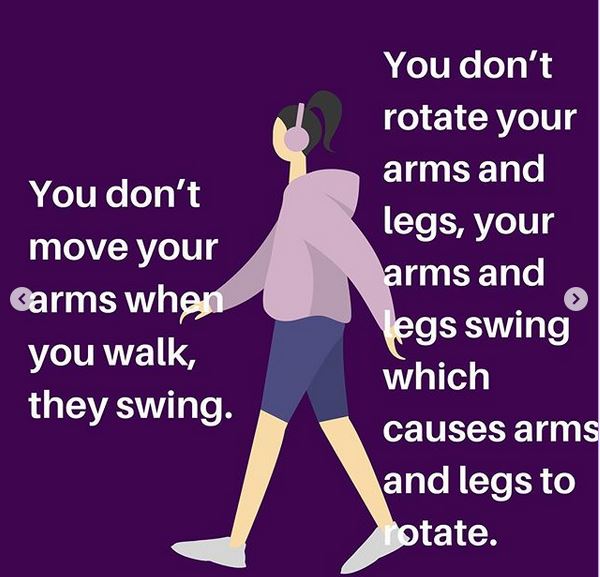
The greatest directional influence on our body’s tensegrity and tempo is forward movement. All of our integration of planar function and neurosensory function is correlated with our environment moving backward; as we cough, speak, walk, reach, chew, listen, sit, watch, etc. The slightest forward movement of the head, arm or leg, is cortically recognized and managed through vestibular related memory and reflex, and cerebellar coordination of the somatic motor sphere. Our ground and space around us are “ours” when we move forward. No one else possesses this personalized biopsychosocial and psychophysiological event. The benefits associated with forward movement, far out weigh those of moving in any other direction. And that would include the wonderful gift of “falling” backward, only to “catch” ourselves, by reaching forward, with a head, arm or leg.
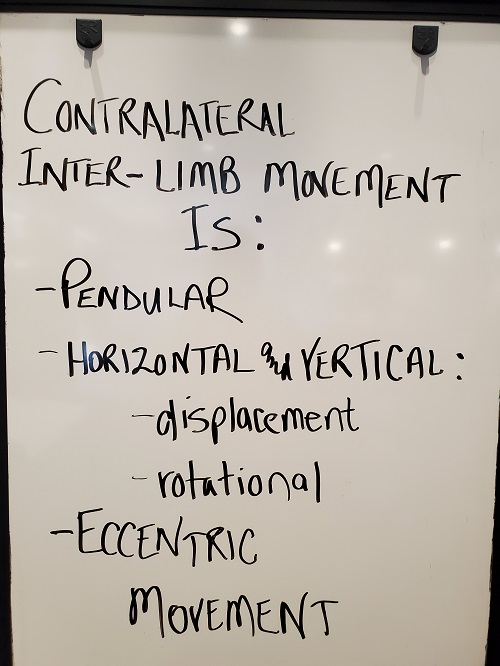

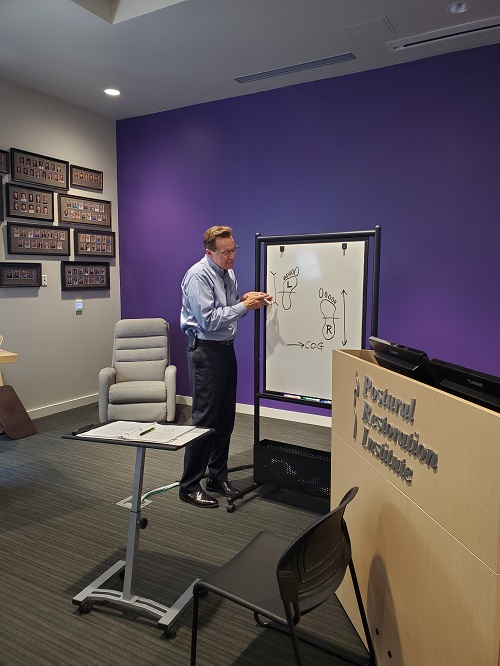
The greatest benefit of having lateralized cortices for integrated visuo-spatial, hemispheric chest, upper limb and lower limb alternation is bipedal, upright forward locomotor movement. Between five million and seven million years ago, some apelike creatures in Africa began to walk habitually on two legs, through savannas, using visuo-spatial propulsion, inter and intra arm pull, and hemi-chest compression.  They never could have walked from Africa into Asia and Europe, two million years ago, if they did not first make and flake crude stone tools with their upper limbs, a half million years prior to that time.   Their arm function was necessary for their respiratory chest endurance to travel and for their peripheral view as a safe voyager.

The modern form of a human, as we know of today, depended on this earlier pre-existent, hemi-cortical dominance, approximately 200,000 years ago, for refinement of existential forward movement that revolved around the establishment of culture and community.  How we shape, grow, pattern and build our behavior and our body, depends on how we move objects that are in front of us and to the side of us, toward us and to the back of us, with inter and intra-limb pull, chest compression, and visuo-spatial propulsion; all allowing us to move forward, like our 200,000 year old ancestors.
(Sarah Petrich, @drsarahpetrich, Instagram)

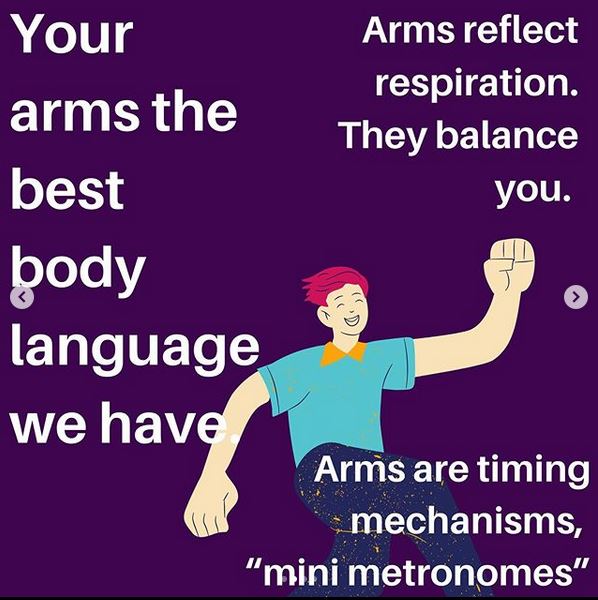
Our industrial commercialism, capitalism, and careerism, in the present time, has contributed to our heads moving forward, objects in front of us moving forward with us, and objects or environments on the side of us, all moving forward together at some, or all of the time during “walking”. We are on an ecological and evolutionary timeline where the human, in his and her civilization, are doing everything they can to move themselves forward efficiently, in an existential sense. Unfortunately, because of the un-natural commodities around them, they are also moving the entire environment and world around them, with them. Our cortices developed in size because of the need for cortical interplay, as we became dependent on each other, through our sense of movement, space, communication and balance from our eyes and ears, chest walls and cavities and upper and lower limbs. Concrete pavements, straight walls and fast-moving transport systems did not develop today’s unhealthy and unnatural imbalanced forward locomotion. It did however, help bring out the biological rivalry we so often see in our patients, between their two eyes, ears, arms, chests, and legs; and furthermore, contributed to the more recent world of over lateralization for survival of the fittest, fastest and flattest (spine) humans.
(Sarah Petrich, @drsarahpetrich, Instagram)

Homo Sapiens, and the way they move themselves forward, are still evolving and the four components of corollary cortical function are outlined in this course, simply because these four components and the degree to which they are used with and by each other, will reflect on the future’s researcher and anthropologist studies of Holocene human climate of forward movement patterns. Our social climate, our environmental climate and our health climate reflects the demands and challenges we place on our own bodies and thus the environment that encompasses these human patterns of addicted adduction of four of the most precious resources are bodies possess.

I personally, want to thank Jen Platt who consistently and constantly puts up with me and my insane requests to put material together that has never been put together, to my knowledge, in the manner that we have, with outlined research that supports the forward movement, that we should respect. I have been looking forward to teaching a course like this for many years. Therefore, it is hard to summarize my feelings about this topic and the opportunity that this year and the staff around me, presented me. Such a gift. Personal gratification is extended to all you who are observant, and watchful of this journey, of broadening the environment and evolution that is responsible for the patterned world we live with and in, today.
(Nancy Hammond, @integrate360, Instagram)
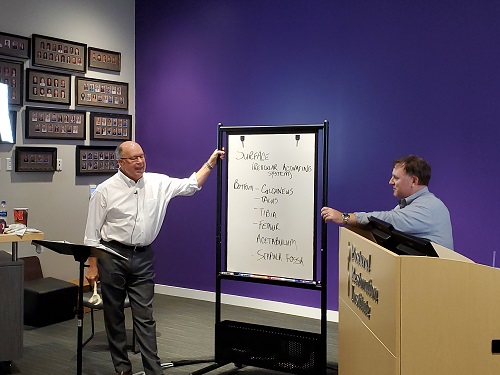
I had the wonderful fortune to visit with Dan Houglum MSPT, ATC/L, PRC the day before this course was presented via live stream, beginning on Aug 22nd. Dan’s insight on the Institute’s past, present and upcoming future is always appreciated and questioned by me, simply because he places events, courses, course material provided in two or more courses, timelines, and approaches in an aligned state, for comparison, contrast and collocation. He and his career time have grown around this juxtaposition. He has an intuitive sense of how organizations operate by addressing and assessing this operational behavior, and therefore, he enjoys watching, and participating in, the delivery of the Impingement and Instability course; that was initially offered in 2007 without the ability of the attendee to compare it to another pre-existing course.  

The fact that the first course in February of 2007 can be compared to the last course presented in August of 2020, allows one to quickly see the similarities and the advancements. The fact of two courses, with the same title, written by the same author, can be placed close together with contrasting effects is called a juxtaposition. The juxtaposition of these two courses portray an image of position of bones in 2007 and a position of sense of these same bones in 2020. Dan took his first PRI course in 2004 and has had significant juxtaposition moments since. Juxtaposition is a word that describes the contrasting effect of two things that are placed side by side or close together. For example, two course manuals, with different dates and yet with the same information, may have juxtaposition when one of the courses have been updated, advanced or added onto. Another example of juxtaposition, is this course itself, by looking at cortical function of the human’s two sides of the body that are parallel to each other or “next to each other”. Instability on one side of the body may need to occur when the other side of the body, in the same region, is referencing impingement or the contact of two bony or joint surfaces. One side needs to cortically “loosen” up while the other side can “tighten” up.


This ‘positional juxtaposition’ helps us appreciate the need to experience instability, to remain on guard and prepared, as well as the need to experience impingement, to remain confident and in control, when we lose sense of composure. Parallelism of our two sides of our body, and their associated neurologic and orthopedic juxtapositions, has always been a strong interest of Dan’s, and having him by my side, when I taught this live stream course, gave me and everyone that was present, a considerable amount of favorable comparative contrast.

We are excited to announce that registration for our newest secondary course "Forward Locomotor Movement" is now open! Make sure to visit the course page, to read more information about this new course! The first opprotunity to move forward with this material is schedule for October 3-4th, dont miss out!

Course Description

This course offers the attendee an opportunity to re-examine ‘gait’, ‘ambulate’, ‘walking’, ‘bipedalism’, and ‘locomotion’ by addressing the cortical coordination of the human limbs that are responsible for individual forward locomotor movement patterns. Neurological and physiological dominance is designed around introspective habituation and compensation, that reflects physical predominant hemispheric loading and cortical hemi-spatial flow. A comprehensive, and up to date, review of literature and research on cortical dominance and associated pre-existing dominance factors that define interlimb and intralimb interaction during forward movement of the body, is offered. Arm and leg control, and overall associated motor function of human swing, support and propulsion will be addressed through asymmetrical gravitational balance effort and anti-gravitational eccentric considerations. Both, arm and leg control, and function in human locomotion, will be dissected and described, as a novel introduction to integrated upper and lower extremity movement, and hemi-spatial awareness and hemi-chest activity will be outlined, for all phases of forward locomotor movement. Clinical recommendations for individual introspection of forward locomotor movement will be provided throughout the course. Eccentric control of functional cortical predominant patterned limitations on locomotor movement, along with multisystem guidelines for reweighting balance through limb use, will be provided through the use of PRI non-manual technique application.

Page 22 and ‘The Room Where It Happens’  

On page 22 of this very updated course, the first bullet reads; “After significant reflection on historical ‘patterned occlusal pathomechanics’ of the teeth and corresponding feet over the years of clinical integrated interdisciplinary practice, I believe the human neck is the greatest neuromechanical mediator and indicator of treatment outcome.”  It was so enjoyable to put this course together and be able to write page 22. The organization and the establishment of content, beginning with a discussion on teeth and feet provisional occlusal interference, fulfilled my intense desire to explain how teeth and feet interfere and intercede on each other. Having twelve dentists present and willing to learn how postural mechanics are regulated by appendicular skeletal musculature interplay with oral facial skeletal musculature, was so gratifying. These dentists will play a major role in the future restoration of non-integrated feet and teeth mal-occlusal patterning. The interaction of these dentists, with other PRI minded, movement professionals, will help define what “true postural” occlusal restoration entails.

On page 22 of this very futuristic course, the second bullet reads; “Restoring normal occlusal patterns of function at specific stages of tooth to tooth contact/interference and foot to ground contact /interference, reduces cervical pathomechanics and related symptomology." This is the intent of this course …

I hope many more professionals, in the future, will want to be on page 22 where  “PATTERNED OCCLUSAL PATHOMECHANICS AND THEIR POSSIBLE UNDERLYING BIOMECHANICAL CONTRIBUTION” influence on interdisciplinary intervention decision processing, begins. I truly feel that there will be more of us in the future that will want to be like Hamilton, in the recent musical, when he said to “Mr. Burr, Sir”; “I want to be in the room where it happens.”  I believe all of our descendants, along with interdisciplinary minded professionals, will “want to be in the room where occlusion happens”.

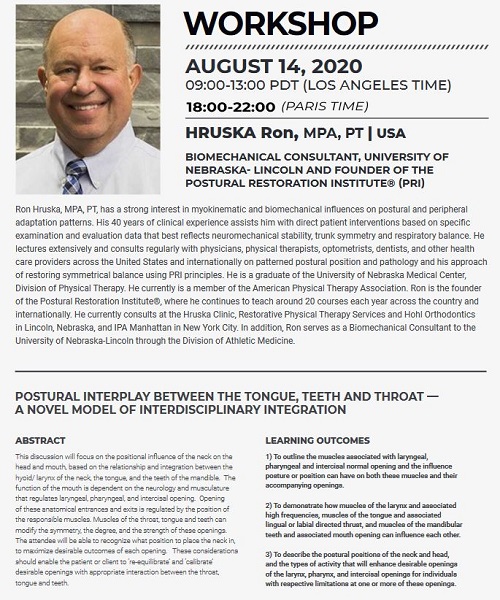
Ron Hruska is excited to be an upcoming presenter for the AAMS Virtual Congress Reimagined. This virtual congress is featuring over 100 speakers in 9 tracks, over the month of August. Ron will be presenting on Friday, August 14th, on "Postural Interplay Between the Tongue, Teeth and Throat – A Novel Model of Interdisciplinary Integration". Virtual congress attendees are able to participate via live stream for the upcoming presentations, and attendees will also receive access to all presentations on demand until October 1st. CLICK HERE to view the program and register at www.aamsinfo.org/2020-congress.

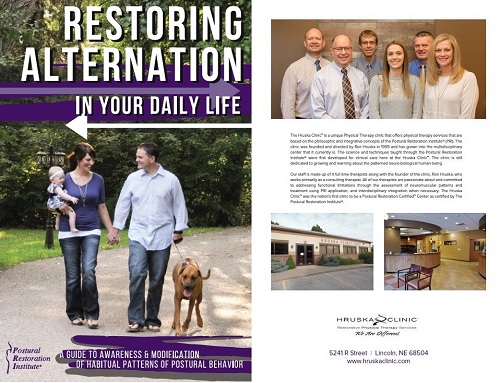
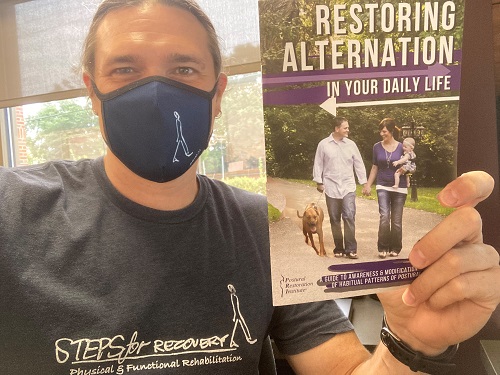
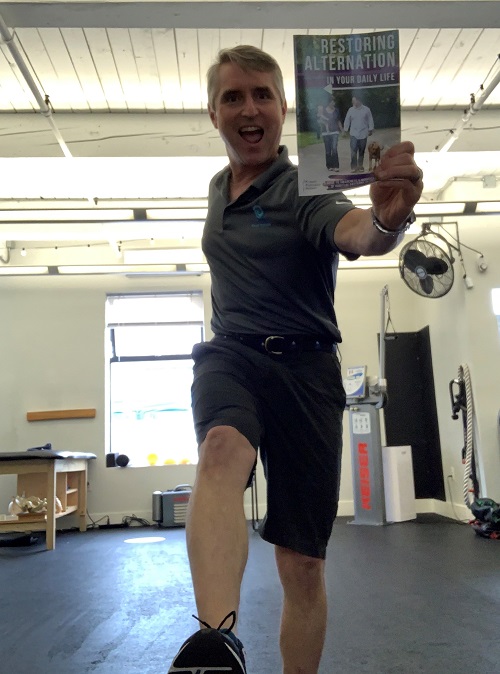
We are excited to announce the release of our newest product! The Restoring Alternation Patient Guide is now available! This guide has been put together to help bring awareness to the activities that we perform regularly in our daily lives.This 16-page guide outlines several daily activities which are commonly performed in dominant or patterned positions, and demonstrates alternate ways and instruction to perform them. Copies of this guide can be purchased through the Institute, to provide and discuss with your patients and clients, the importance of decreasing the over-dominance of one side of the body, and using both your left and right sides with alternation and balance.

Customizable Guide

Customization, including your business logo and contact information is available on the back cover of the guide. Here are four examples of the templates available for customization: 1 photo, 2 photos, 4 photos and up to 8 photos (this template should be used if you want to display up to 6 staff photos/credentials).

Non-Customizable Guide

This version is non-customizable and includes the history and information about the Postural Restoration Institute!

Click HERE to preview the inside of the guide.

Shipping is included on all orders, and ships directly to the shipping address provided when placing your order. Feel free to Contact Us with any questions you may have! Grab your Guide today to help your patients and clients alternate in their daily lives!

A big shout out to Josh Olinick for his inspiration to complete this customizable guide!

Just this past week, we made the decision that we WILL host the Advanced Integration course as both a Live AND a Live Stream course. To allow for social distancing, we will limit the live in-person attendance here in Lincoln to 36 participants, and then an additional 100 attendees will be able to participate in the course via live stream on Zoom. This could of course change depending on the COVID restrictions nationally and/or locally, however this is our plan as of today.

*Candidates accepted for PRC testing will be required to attend the Advanced Integration course in-person in Lincoln, NE (if they have not attended this course in the past).

For anyone who is planning to apply for PRC testing (who has not previously taken the Advanced Integration course or if you were planning on taking the course again before PRC testing), we recommend that you register for the LIVE in-person Advanced Integration course ASAP to guarantee your seat. PRC applications are due by September 15th. Advanced Integration will take place in Lincoln, NE on December 3-6th, followed by PRC testing on December 7-8th.  

We will take all necessary precautions and added safety measures, including requiring masks, to ensure a safe environment for those attending Advanced Integration and PRC testing in Lincoln.

This is always an exciting time of the year for us, and we are really looking forward to this four day course and PRC testing to wrap up 2020! If you have any questions, please contact us!

Several months ago Ron asked me if I would like to come to Lincoln and co-teach Cervical Revolution via Zoom the last weekend in June this year. Our discussion took place as the Covid Crisis was peaking and getting on a plane, even a nearly empty one, wasn’t on my bucket list. I thought, heck, we are in the middle of a national health crisis and what could be my options? Then it hit me. Road Trip!


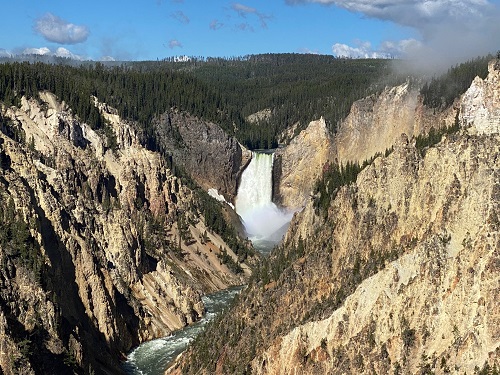
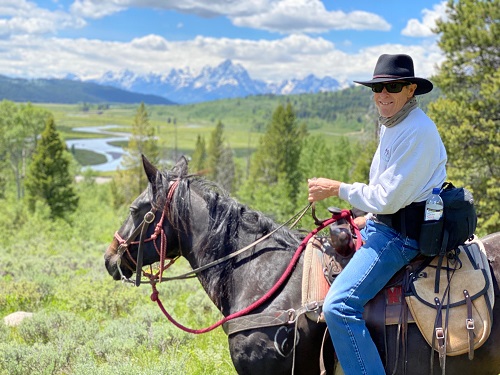
Yes, I decided to drive from La Jolla to Lincoln in my pick-up truck via Jackson Hole, WY, the Grand Tetons and Yellowstone National Park and get back some of my long lost cowboy along the way!  What a trip and the opportunity to wander and explore some of the most beautiful places in this country and wildness anyone can imagine. The harmony of beauty and wildlife of the “American Savannah” was a perfect place to be while leaving the pandemic behind. Masks and appropriate distancing along the way of course with a can of grizzly bear spray on walks away from the maddening crowd was just what was needed! The animals in the Tetons and Yellowstone are accommodating, some more like hams, for pictures and conversation as long as you keep your distance. Bears, marmots, osprey, bison, elk, white pelicans, Canadian geese, swans, hawks, eagles and beavers were a few of my friends on this part of my solo journey. Though I had ridden horses in my youth and used to guide stable trail rides as a teen, I hadn’t been on a horse in over 30 years and it felt natural again to be on “Baby”, a seasoned trail horse of the Grand Tetons. John Denver’s ballad “A Song of Wyoming” was playing gently in my mind all the while as I got my cowboy restored for just a little bit. The Millennial’s right about now are having an “OK Boomer” moment wondering who’s John Denver?


After 9 days in the Tetons it was time to head to Lincoln, NE via the Native American Wind River of Wyoming and the Rattlesnake Mountain Range beyond headed to the Plains. Well howdy, I am off to the next adventure with the Hruska Clan and my PRI “Fam”. We had 4 days together for catching up, recording a new PRIVY with Ron and I and then co-teaching Cervical Revolution.


Every PRI course has the same basic outline that is followed over the weekend but every course manual has many times the information that can be covered. Every time a  PRI course is taught, even if the same course, it will be different depending on the questions asked by the students and where the faculty member is in their understanding of the material. This course was no different and both Ron and I were able to interact and expand on what each of us were presenting. Teaching with Ron is so fun since he is always pushing the limits of understanding of this science.


What was fun for both Ron and I was that he got to be a patient for the first time in a course as I performed cervical tests on him. Teaching via zoom is the new world for all of us for now at least and this was my first experience being on the transmitting end of things. Jen Platt is a master at organizing and facilitating the experience and her behind the scenes prepwork is irreplaceable. The interaction was engaging and totally fun with students from all parts of the country as well as other countries including Japan, Australia, Canada, Europe and California! Performing a lab with a student without being right there “hands on” has become an art with Ron and is a powerful way to illuminate how to affect lateralization and sagittalization for the purpose of restoring neutrality. The atlanto-occipital junction is a highly reflexive and neurologic region that has to be respected and integrated into any PRI program. Included this weekend in the opening remarks was “Cervical Revolution by the numbers” which include this is the fifth appendage, is highly neurologic, reflexive, has two main openings, needs just the right amount of tone and most especially the fact we have two necks. These two necks need to oscillate back and forth and brainstem via the A/O joint is regulating everything that goes through it!  


The relationship between the cervical spine, especially the atlas and occipital bone, the cranium and occlusion was defined and explored as Cervical Revolution is becoming much easier to understand as the course content has been refined and described in a powerful more concise way. Thank you to all the students in attendance including Mike Cantrell and his input during the course. Thank you Jen Platt for your making this course happen along with RJ, Hannah and Matt. And Ron, Thank You for the opportunity for my road trip and an opportunity to team teach with you. All of us faculty members miss live courses, our PRI family, friends and peers that take these courses, and the opportunity to share PRI with our colleagues.

__________________________________________________________________

Course Attendee Testimonial:

"I am writing to express my huge gratitude to you, Ron and Skip for the amazing work you all have done over the last two days. Yesterday we finished the course at 12:30~ AM my time (Malta), now it’s 6 o’clock in the morning and I woke up just because I could not wait to share it with you.

So yesterday after "Standin Alternating Reciprocal Cranial Expansion" I shared that I felt click on the right temporal/jaw area followed by the left click every time during end exhalation while  standing on the right leg. However maybe due to the stress of first time being on the camera in my life, maybe sitting all day, or maybe that I kept playing with my left posterior mediastinum before – I did not feel very differently after the technique when Ron asked me about it. However, about 20-30 seconds after the attention shifted away from me, stress levels went down, I suddenly felt something different. It was hard to explain what it was, but it felt like there was a "huge beam of attention" striking to my left leg. I didn’t share it right away since the state I found myself in felt a bit confusing and I wasn’t sure what I was feeling. So right after the course finished I went to a hot shower and as I was in there, I decided to repeat the technique. The same click was there again, I stayed in it for a few breaths longer than before. And suddenly the world has shifted. It felt like my right side shrank down, it felt like I became smaller. Suddenly I felt like I just opened my legs and had them wider, although my legs didn’t move. I went to sleep, and I woke up on my back which never happened in my life, as normally the only position I can fall asleep in is on my belly. Not only that, but I had a pillow shoved in under my right lower ribs, which I found super strange as I don’t remember myself doing it (maybe related to my right lower ribs being "shifted" back as I am ex-boxer and had them broken 9 years ago and they healed in the retracted position).

 
I woke up feeling different in a really really good way, and I jumped out of my bed feeling sore regret  that I didn’t get the chance to share this with the other course attendees. Now I know what it is to be a BELIEVER in what you were teaching!

I bow my head to you Jennifer, to Skip and Ron! You guys are my heroes, and I can not express how thankful I am that you are taking the world of "non-denominational" health into another dimension! I feel like this is the best course I have ever taken in my life. And I will continue to take courses from you! I believe you guys are God gifted to bring this message to the world and you are doing a miraculous work of fulfilling that duty! I am hooked, and I hope to someday stand with you guys on the same boat of understanding, and I will put daily effort until I get there!"

– Timas (Malta Island)

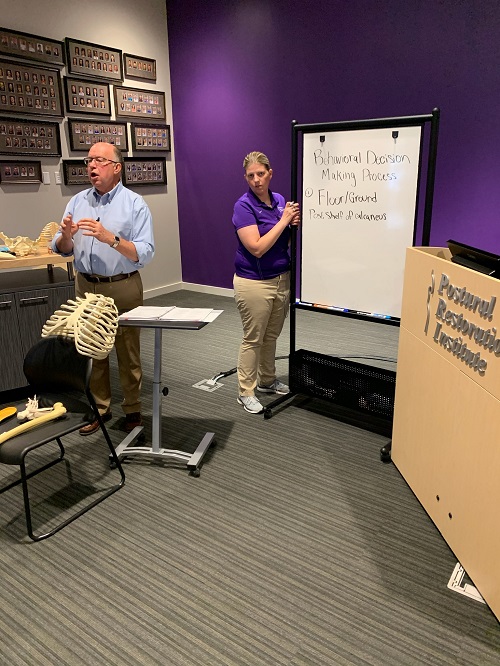
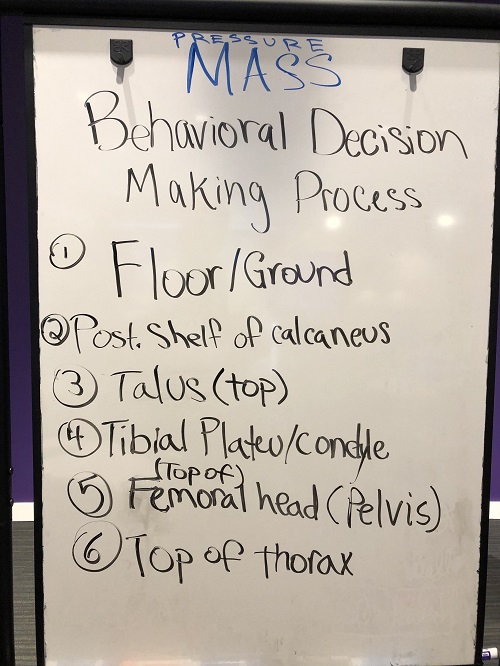
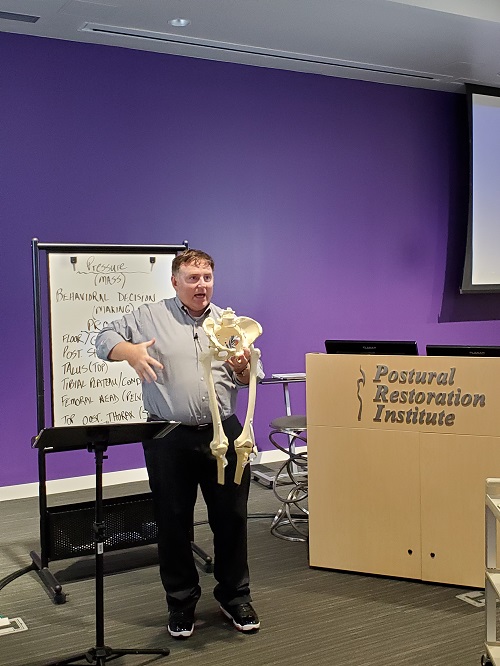
Writing up a summary of an overview of a course that covers the most prominent patterns of impingement, instability, interference, and influence related to cortical and functional dominance is difficult to do, especially when my mind wants to elaborate on all the material that relates to only four anatomical regional tabs in the course manual. This course is fun to teach. That is about as short of a summary I can make. This course is an overview of ‘my’ cortical function as it relates to biased concepts (my concepts), on human biased compression and de-compression. Explaining the human’s brain cortical functional dominance integration, built off of the sense of the bottom of paired calcaneuses, taluses, tibias, acetabulums, and fossae of scapulas is a gift, and an enjoyable challenge for me, after looking at this ‘traditional’ way of thinking for over four decades. This is a novel way of approaching the way we use our mass on the floor/ground, posterior shelf of the calcaneus, top of the talus, top of the tibial condyle’s plateau, top of femoral head, and top of the ribs of the thorax for sense of pressure.   

That’s why this summary is so short;  “It is fun to teach!”

We are taking a break from our Tuesday night "PRI Breathing Mechanics in COVID Times" webinar series this week, as Ron Hruska will be presenting on the American Academy of Physiological Medicine and Dentistry (AAPMD) webinar!

The title for thir webinar is "AIRWAY MANAGEMENT: Implementing Interdisciplinary Concepts Associated with Forward Locomotor Movement". This webinar discussion will outline how the body is moved forward during forward locomotor effort and how this effort influences and auto-regulates nasopharynx, oropharynx, hypopharynx and larynx airflow. Three questions will be addressed.

  1. How does forward locomotor movement (FLM) influence pharyngeal and laryngeal movement of air?
  2. How can one implement change in FLM patterns and improve pharynx and larynx air flow? 
  3. And finally, how can attributes of FLM be maintained or optimized by “airway” inter-disciplinary minded professionals when FLM ends?

This free webinar is tomorrow, May 19th at 9pm ET/8pm CT. To register, CLICK HERE!

In light of what is going on around all of us and the associated uncertainty of this virus that will no doubt continue into the summer months, we have made the difficult decision to once again postpone the Interdisciplinary Integration Symposium.

We do not feel that it is in the best interest of the Institute, the Speakers, or PRINation to try and host it this August, like we had hoped would be possible when we initially rescheduled. We really want to host this as a live event, rather than a streamed event. Each of the speakers have such strong messages that will be reinforced by live participation from both the other speakers as well as a full room of course attendees. This is what makes these Symposiums so special year after year. We also feel, because of so much uncertainty regarding our economy, transportation and US CDC guidelines, there would be many individuals who would not feel comfortable attending this August. Therefore, we are re-scheduling the Symposium to April 22-23, 2021. This year’s topic on Parkinson’s Disease and Extrapyramidal Disorders has garnered a lot of interest over the past several months, and we have no doubt that next year’s symposium will be one of the best ones yet!

We are planning to have our Anniversary Celebration next April as well. As symposium speaker and PRC physical therapist Jennifer Smart said, “Twenty-one years is a special number to celebrate too . . . the Institute has really come of age once it hits 21!” We are hopeful that you will still be able to join us in Lincoln for the symposium and this special anniversary celebration. 

We apologize for having to re-schedule this again, but we do feel that we are making the best decision for everyone involved. A lot of unsettling discomfort is being felt as a result of this global crisis, but we are hopeful that we will all be able to come together stronger than ever next Spring and have a room full of attendees excited to embrace this topic without stressing over social distancing and social traveling. Enjoying each other, collaboratively, socially and professionally make these Symposiums and their associated memories very special, and we hope that you will be able to join us in April 2021 for this overdue symposium and celebration!

We had a great time last night on our first "PRI Breathing Mechanics in COVID Times" free webinar! We had around 250 people join us, and we look forward to hopefully growing this number in the coming weeks. If you missed the live webinar last night, you can access the recording on the Webinars page on our website. A PDF handout of the PowerPoint slides is also available on the Webinars page.

Below is the 3rd (of Ron’s Top 10 Chest Wall COVID Breathing Techniques that we will be discussing further on these webinars) non-manual technique clinical reasoning break down. We invite you to review and try this technique a few times over the next week, as we will be discussing this and more on next Tuesday’s webinar.

Standing Supported Left Glute Push

Let’s start with the title of this PRI Non-Manual technique.

This “standing” technique requires wearing shoes that provide good heel counter support, arch support and a toe box that will allow the toes and forefoot to easily spread out in the shoe. You will also need to push a table next to a wall to prevent it from moving forward as you push it forward with your hands (or you could use a kitchen or bathroom counter in your home). This PRI technique is designed to place one in a ‘Valsalva-like’ maneuver position between the exhalation and the inhalation phases, without blowing up a balloon and holding the expelled air or while pinching off the nose. 
 
In this technique, the force applied by the table and floor allow the tongue and mouth to close off the airway and properly use the abdominal muscles and the diaphragm to exhale and inhale without engaging the neck or back under moderate pressure created by closing off the pharynx with the pharyngeal muscle and the larynx/trachea with the tongue muscle. This voluntary control of the abdomen is maintained during the entire technique, without having to think about how to “hold” the contraction of the abdominals during both phases of the respiration cycle. It is a wonderful way to teach someone how to inhale with good opposition to the diaphragm so that its effectiveness on opening up the mid and lower chest wall is maximized, as the subconscious effort of maintaining abdominal stabilization is minimized.

The “support” of the upper extremities, offered by the stable table or counter, also allows one to lift the right leg up and the right foot off the floor as the left glutes "push” the body forward to further stabilize the lower trunk and pelvis as the right hip is raised up. This activity co-activates more integrative assistance from the right hip flexors, the right lower trapezius and long head of the triceps and left abdominal wall. When all said and done the tension and internal pressure created by the lengthened anterior shoulder and hip flexors enables one to breathe with the diaphragm under high compliance and forgiveness of lateral and posterior chest wall tension.
 
This technique is, therefore, a good technique because the lateral, posterior, apical and base surfaces of both lungs can expand easily upon diaphragmatic contraction, secondary to chest wall compliance and the gravitational force displaced on the abdominal contents. The internal organs fall anteriorly and off the front of the thoracic and lumbar spine. It is also, an excellent postural drainage technique for the posterior lobes of the mid to lower lungs, preceding the standing positional induced coughing that more than likely will follow with those who are experiencing difficulty breathing because of fluid-filled alveolar sacs.

Here are some additional comments about the steps that follow the title and pictorial examples, along with the reasoning for the procedural step.

Stand with your feet parallel to each other and directly under both hips. While keeping both heels on the floor lean forward to place your outstretched hands on the table in front of you. Now move your feet back so that your back is close to being parallel with the surface your hands are supported by, and the floor or ground you are standing on. You should feel a gentle stretch through the back of your heels and lower legs. Maintain heel contact with the floor or ground surface, especially on the left side.

These first two steps are important because you are now in a position where anything you do from this point on will foster more uniform opening of the entire circumference of your chest walls. This position, as reflected by the person in the second photo, also indicates that the attachment sites of the latissimus muscle on the side of your chest wall is in its lengthened state, as both of its attachment sites are distracted from each other. In other words, the arms are moving away from the mid to low spine, as the spine is more rounded than “U” shaped in this position.

This is an optimal position for the diaphragm to be in for coastal or mid to lower rib cage expansion upon contraction. It also is a great position for one to sense the abdomen lift the abdomen up against gravity and feel how one’s own body weight can serve as an element for abdominal strengthening with optimal diaphragmatic influence on the chest wall mechanics for ideal ventilation and perfusion at the anterior base of each lung’s lower lobes.
   
Shift your left hip back in Step 3 to engage your right hand as a pusher and to sense, activate, and lengthen your left outside hip muscles in preparation of using these same muscles to lift your right foot a few inches off the floor. While keeping your back parallel to the floor, in other words do not let your mid back sag toward the ground, lift your right knee up and your right foot off the floor/ground. The weight of your body should now be felt through both wrists and hands, your left hip, your abdominals especially on the left, (if you feel your right abdominals more than the left, you need to push more with your right hand into the table you are supported by) and the entire bottom of your left foot. This ‘highly integrated contracted’ position replaces the need to do this activity by blowing up a balloon correctly using PRI methodology.

Now hold this position as you take a deep breath in through your nose as you “push” with the above musculature and reference sites, outlined in Step 3. Then blow out through pursed lips or your mouth slowly by pushing slightly more with above muscles and sites. The most important consideration in Step 4 is to transition slowly from exhalation to inhalation with a “pause” (Valsalva pause) in between the exhalation and inhalation phase, without losing the “push” from your body while breathing in this reciprocal state of glossal sealing and pharyngeal closing during respective inhalation and pre-exhalation reciprocal breathing.

Stay tuned for more discussion on Ron’s Top 10 Chest Wall COVID Breathing Techniques on our upcoming webinars and blog!

Subscribe to our Newsletter