The Forward Locomotion Movement course is one of my favorite courses to teach because it has significantly changed my PRI treatment approach. Specifically, how to integrate visual perceptual awareness of the ambient visual system with the rest of the body during upright movement. In my opinion, FLM, Voice Box, and Cranium are three PRI courses that work together to integrate the somatosensory system, sensorimotor system, and autonomic nervous system together for improved system-wide ability to alternate and manage gravity. And, for me, the reason is that those courses use PRI NMT that we already know, and applies the scientific model of neuro-sensory behavior modification to address musculoskeletal performance far beyond what traditional orthopedic-based constructs can provide.
One of the things that separates PRI from other educational institutions is how much research is found in every course manual. FLM provides as many (or more) reference articles and books to support the concepts and techniques as any other PRI course. We spend time going through much of the research as a means to explain to the well-seasoned PRI practitioner why and how the PRI NMT are going to be cued differently, using sensory and pressure references, to change how the body “chooses” to move upright against gravity.
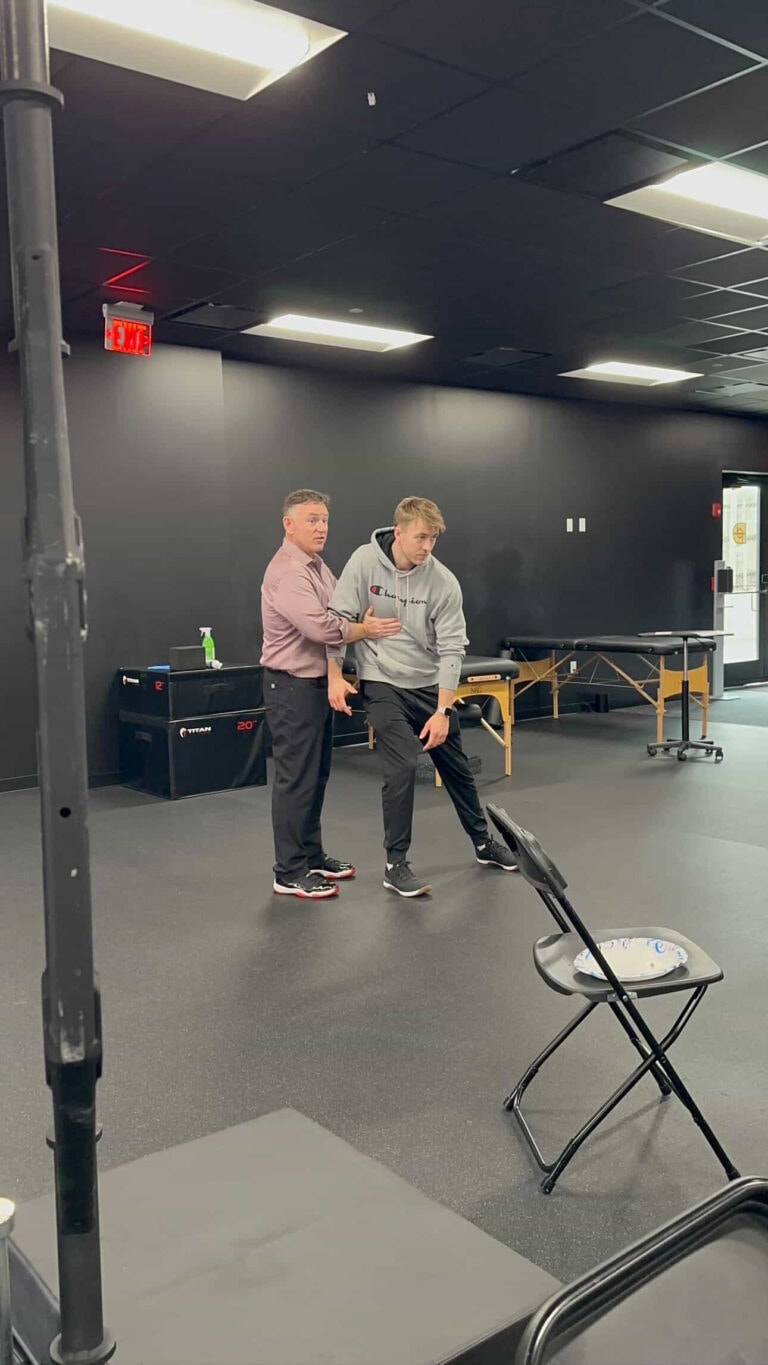
We also spend time demonstrating, discussing, and performing many of the PRI NMT found in the FLM course while applying sensory and pressure references, so the attendee can sense, feel, and understand why and how to cue these techniques to achieve the shift in functional vestibular predominant behavior. FLM is a very forward movement-based course. And one of the things that research demonstrates is, based on how the brain functions, the body doesn’t actually need to be moving forward to improve how the body moves forward; horizontal and vertical displacement are paramount while “grounding” is not.
We discuss how to know when to choose different PRI NMT to achieve these outcomes. And that allows us and avenue to discuss how to use the Hruska ABD Lift test, Hruska ADD Lift test, and Hruska Alternating Reciprocal Rotation test to assist in that decision making process. Since this is a Tertiary PRI Course, we have an opportunity to discuss those tests much more in-depth, and at a level that we cannot discuss them in the Primary or Secondary courses.
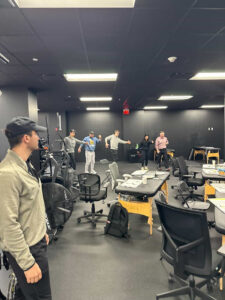
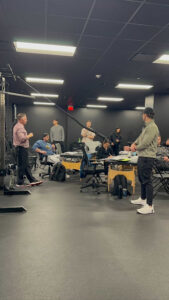
My thanks to Divergence PT and Wellness for hosting us. And my thanks to Peter Jang, Eric Menchi, Kyle Coogan, Rachel Medvedev, and Daniel Gosselin for their participation and questions during the course.
If you have taken several PRI courses and are interested in how to apply PRI concepts during upright movement so your patients and clients can retain the gains they are achieving, then I would encourage you to take a Tertiary course like FLM. FLM is not like any other “gait” course you have heard of or possibly attended before because this is not a “gait” course. It is a course that unlocks the brain’s ability to self-actualize pressure and spatial management when upright against gravity during progressional displacement. Hope to see you at an FLM course in the future!
– Dan Houglum