Community News

Welcome to the Postural Restoration Community! This is where you will read the latest industry news, hear about upcoming events, find helpful deadline reminders, and view a plethora of additional resources regarding our techniques and curriculum. The great part about it is--not only can you can view the entries we post, you can also post about the things that matter to you. Did you find an interesting article about a technique you learned in one of your courses? Do you have a patient case study you want to share with other professionals? Simply click "Submit an Entry" and follow the easy steps towards getting your information published in the PRI Community!

Select Date

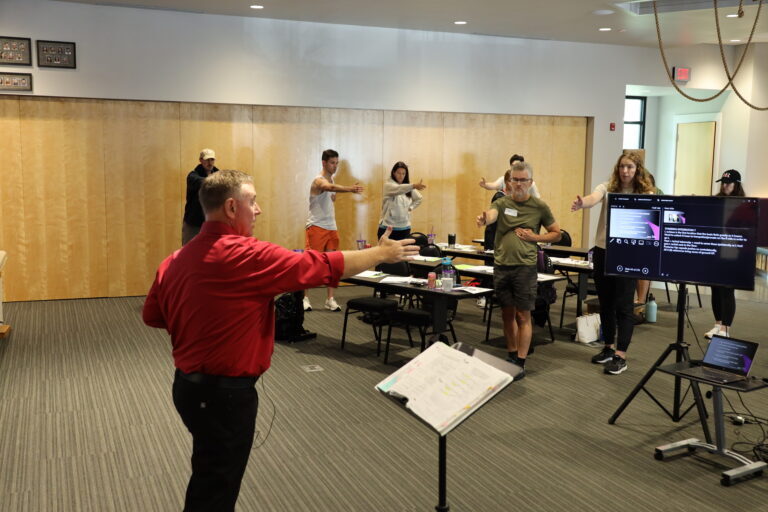
It was my distinct pleasure to present the Forward Locomotor Movement course. It is a reasonable new PRI course in the last 5 years. Ron and Jen have spent a lot of time and energy putting together a wonderful manual and cheat sheet. The research behind this course is astounding, as is the clinical relevance.

For me, this course is “the forest.” Most PRI courses are helping us, the movement specialist, get a better appreciation for “the trees” so we can help our patients and clients sense themselves better. The extensive research behind why we, as humans, can never become stuck on the L side of the body, helps inform patterned behavior from the visual system to the talus. This course explains the interaction between the hemi-visual, hemi-chest, hemi-arm, and hemi-leg systems.

We spent a lot of time discussing how some new and some previously explored PRI non-manual techniques can be used to address many of these hemi-issues. We were able to provide clinical examples of how to use this material, and how to avoid confusion. This course brings together concepts from the three Primary courses, Cervical Revolution, Impingement and Instability, Cranial Resolution, Human Evolution, Occlusion, and Visual Vestibular Refinement. We were also able to link advanced use of the Hruska Adduction and Abduction Lift testing to this course.

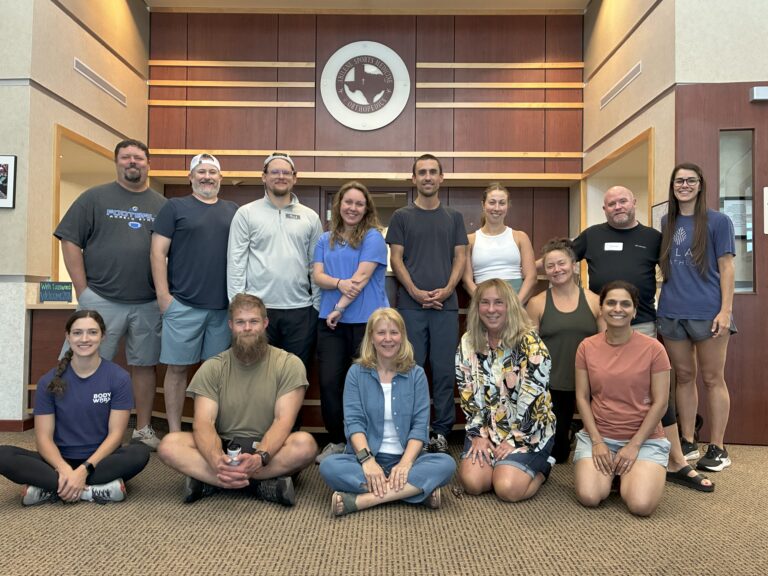
I would like to thank the eight PRC’s who attended in-person and on live stream. It was an honor to have you attend. I also wanted to thank Elysia O’Connor, Kurt Weidauer, Curt Johnson, and Brad Howe for their attendance and excellent questions.

If you have taken several PRI courses, but are wondering how it all fits together, I would invite you to addend Forward Locomotor Movement. It is a clinician’s course and is heavily research based. I hope to see you at a PRI course in the near future!

-Dan Houglum

It was a big weekend in the state of Michigan, yes they had two teams dancing in the sweet sixteen, but more significantly Myokinematic Restoration came to town. Hosted by Team Rehabilitation in Madison Heights, we broke down our body’s inherent asymmetry and studied game film.

Many basketball teams show tendencies, whether it’s to rely on the three point shot or to attack one side of the court more often than the other. Our human “court” is tilted to the right and we need a plan to level the court and attack the left side of the hoop. As a basketball team it’s best to have options and be able to swing the ball well to either side, as a human, it’s ideal to maintain our ability to oscillate between both sides.

A full court press was employed on the dominant L AIC pattern and a game plan was developed to counter its influence. Repositioning, retraining, and restoring alternation gave our Cinderella team, the R AIC pattern, a chance to join the big dance!

A big thank you to the folks at Team Rehabilitation, they were well represented in the audience and ensured we had everything needed for a successful two days. Thank you to the entire group for giving me a chance to “coach” up your clinical game plans.

-Jason Miller


This year, during the third week of March, an estimated 736,000 Sandhill Cranes (a record high number) stopped along a 75-mile stretch of the Platte River, a stretch that is located about 1-2 hours west of Lincoln Nebraska. This is where, annually, an estimated 80% of the entire North American population of these large (4-foot tall) birds stop to gather the bulk of their sustenance before completing their arduous journey north (to Canada, Alaska and even Siberia), where they breed and raise their young before starting the long trip back south. Knowing about this annual migration is why I suggested (ok, pleaded) that the Postural Restoration Institute schedule this year’s live-stream Cranial Resolution course in Lincoln during that third week of March. They kindly obliged, and I got to experience not one, but two, awesome Crane(ial) highs in one magical week.

Just like this year’s bird migration, this year’s March 21-22 Cranial Resolution course, which Jen Platte moderated, hit a record high number of attendees (54) who all funneled (or at least virtually beamed) through Lincoln Nebraska from all over the globe (people from over 13 countries attended, various European countries along with Australia, China, Japan, South Korea, Singapore and Taiwan). Hopefully all of them gathered enough substantial information to be more successful during the remainder of their (sometimes) arduous PRI journey; information that will help them understand the importance of gravity, not to defy it to take flight, but to help them empower it to get people to better sense centric positioning and respect it for more functional oscillation of the autonomic and central nervous system.

These concepts sound esoteric (i.e: Ron-ish) when you first hear them, but with each rendition of this course, I try to make them make more sense in a clinically logical and applicable way. And from the questions and comments I get both during and after the course, it seems like this is happening. It truly excites and energizes me to see all the ah-ha moments. The concepts aren’t that difficult, it is just that this course tends to look at them from a different perspective, from a cranial perspective regarding how we process and influence patterns of tensegrity, patterns that we have been addressing through respiration in every single PRI non-manual technique we have ever learned. To me, this course makes what we have been doing less mystical, less scattered. It brings things together (much like the pinch of the hour-glass migration pattern of those cranes).

I always love and am honored to instruct this course. I am constantly learning from the diverse group of attendees, this time ranging from PT’s, athletic and personal trainers and massage therapists to physicians, ophthalmologists, dentists and even a horse whisperer (who works with the equine autonomic nervous system). It was particularly rewarding due to the folks that came to participate in person, of which a third of them (2 out of the 6) had flown in from Alaska to be there. These people were still in my thoughts when the day after the course concluded I drove out to the Rowe Sanctuary on the Platte River to tuck myself into a bird blind to watch the Cranes rise and dance as the sun came up (an experience I highly recommend). I had to smile when our guide said that about a third of the birds before us would be flying back to Alaska. Wow, it really was a week of Cranial Resolution parallels.

-Jen Smart

We had such a great time at Myokinematic Restoration in Lincoln last week. Two words that pop out when I reflect on the class are “fun” and “engaging”. What a fun and engaging group in person and online willing to learn about posture, patterns, pathology, and polyarticular chains.

Emily and Leo were excellent examples of left AIC patterns with different needs to re-pattern. They were such a joy to work with and we were all very lucky they decided to attend. Emily rocked 4/5 HAddLT by the end of the day and appreciated the fluidity of a body not in battle with each half of itself. For Leo, we had to consult page 39 to save us time and address his left posterior capsule tension.

Emily, Wanda, and their online friend Nicole brought wonderful Wyoming insight and laughter to the class. Kylie provided an equestrian background and information and Julie updated her Myokin material from taking the class in 2012.

Steven provided excellent questions and put together patterns, posture, and positions with his FRC background. Coach FLEX and Coach Rowdy brought the energy and questions from the back row. Coach Flex provided a fantastic example of how to inhibit southern glutes by retracting a rib cage. Coach Rowdy had some TFLs that needed some hamstrings to be shut off.

A Hruska Clinic PT made an appearance on Day 2 for the benefit of everyone. Big thanks to Ann for being there and providing such insightful information!

This class was extra special for me as I got to travel and hang out with my friend and colleague, Johnny. We had a great time discussing patterns and pathologies on the drive to and from Lincoln. He gets to take Postural next month!

Big thanks to everyone online for participating and providing excellent questions to direct the class flow. We had fantastic participation from around the country from Oregon, Washington, North Carolina, Ohio, Virginia, Minnesota, New Jersey, Iowa, Arizona, New York, Wyoming, and even Canada! So cool to be able to interact with people all over the world at one time.

I hope everyone enjoyed the class as much as I did and are all committed to “do better”!

-Craig

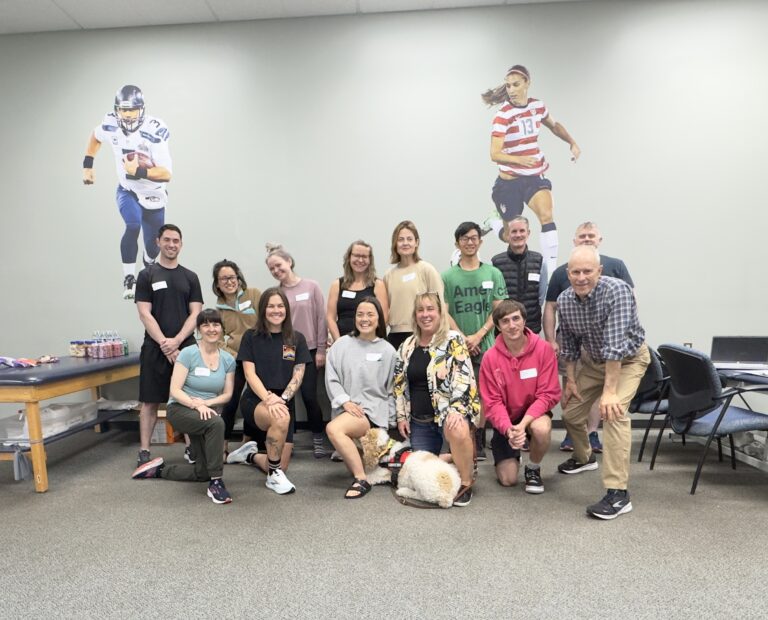
Finish Line Physical Therapy, the go-to rehab and recovery clinic for runners in the NYC area, played host to last weekend’s Postural Respiration course. Thank you Ryan Choi, Sarah Mischianti, and Maile Shigemasa for sharing your space and ensuring the comfort of all participants.

Attendees across multiple disciplines (PT, chiropractic, strength and conditioning, coaching), working with a wide range of patient populations (runners, cyclists, pediatrics, pelvic health, post-partum, musicians, general orthopedics), learned about the wonder and magic of our thoracic diaphragm. We even had a rowing coach in attendance, eager to nudge the rowing world away from its outdated warm-up and cross training techniques and, instead, towards a paradigm that is far more effective in preventing and treating injury.

Over the course of two days, we explored numerous concepts related to how an individual manages their upright existence. We presented examples of ineffective diaphragm position (i.e. lacking a full zone of apposition), stemming from poor opposition from IO/TA activity, including excessive belly expansion or neck muscle activity. These individuals can no longer alternate and reciprocate their center of mass. They move themselves with overactive chains of muscles whose activity our brain is unable to sufficiently suppress. The result? Hyperinflation, sympathetic nervous system dominance, and inefficient forward locomotion and all other dynamic activity.

We had ample lab time for assessment of tests and implementation of program design to address issues associated with patterned respiratory neuromechanics for optimal kinetic outcomes. Of course, lab demonstrations would not exist without our patient avatars. A huge thank you to: Won Seok Choe, Ryan Choi, Antonio Colleti, Patrick Corley, Corinne Croce, David Mueller, Tyler Savory, Sam Scaffidi, Maile Shigemasa, and Brianna Utter for filling this role. I know I speak for all of the attendees when I say fellow PRC Josh Speckman’s assistance throughout the weekend was SO helpful and much-appreciated!

My hope for all attendees is that you begin to apply this weekend’s tests and techniques to determine and correct a patient’s/client’s air flow patterns and restrictions and, therefore, susceptibility to the many pathologies that we treat daily. My hope is that you now recognize the profound importance of assessing the thorax with your patients who present, not only with upper extremity, head and neck symptoms, but lower extremity injuries as well. Patterned breathing, with its diaphragm and rib restrictions, abdominal disuse, and hyperactive accessory muscles of breathing, impacts our entire body, including our hips, knees, and feet. Including thorax assessment and treatment will improve treatment outcomes and hasten your patient’s-client’s return to what brings them joy!

I don’t know if anyone could have more fun teaching PRI than I did last weekend. I am finishing up my work week today and I think I am still as high as those balloons were at the end of the class on Sunday. My cheeks are still sore from smiling. This past weekend was just simply the most fun I have had teaching. I thought the same thing when I was teaching my group in California earlier this year, but 2025 is shaping up to be what I am referring to as “Jen’s year of celebrating “fun” while teaching PRI!”

For those of you who know me well, you understand how I use humor and music to engage my students. This course of Myokinematics of the Hip and Pelvis was no different. We were joined by my favorites Lady Gaga, Beyonce and my new favorite Dua Lipa. If you want to know more, you must come to one of my future courses!

My students were diverse in more ways than one. I had PTs, ATCs, a Chiropractic physician, strength and conditioning specialists and personal trainers. 50% of my students were taking their first PRI class and others had taken several courses. All were there to learn for themselves, their patients and clients that they care for in their professions.

We worked on understanding the underlying left AIC pattern, how it affects position of the pelvis and how a femur will orient or compensate. We worked hard on these concepts to help the student better understand the tests and measures as well as treatment algorithms. We finished our day reflecting on how these adaptations and compensations can result in common diagnosis of the hip including but not limited to piriformis syndrome, IS dysfunction and hip bursitis. It was not lost on my “group of 10’s” (IYKYK) that the condition is a result of the patients own neuro mechanics.
Danielle and Eric were amazing hosts to me and our attendees. They laid out the red carpet and fed us so well both breakfast and snacks. They made me feel welcomed. It truly did not feel like work when you are teaching and learning with open minded engaged learners like my group. I made 20+ new friends. Thanks for spending your weekend with me “10’s”! I look forward to seeing your faces in many PRI courses in the future. Maybe Cervical Revolution next month? 🙂

Spooner Physical Therapy in Chandler is a familiar hosting location that is perfect for presenting PRI courses with a physical therapy staff always pushing for more knowledge and this weekend was no exception. This diverse group of practitioners from physical therapy, chiropractic, occupational therapy and even Feldenkrais Method attended Postural Respiration with “spot on” questions and observations every step of the way during the weekend.

For almost half of the class Postural Respiration was their first PRI course. The topics of anatomical asymmetries, delivery of airflow sense, and the fact of lateralization to one side of the body driven by dominate polyarticular chains of muscle directed by “functional cortical dominance” was completely new to many. The form and function of the thorax driven by delivery of air into the chest wall as it related to center of mass to one side of the body is always a critical point as well as remembering that it is a neurologically driven system along with anatomical asymmetries and asymmetrical air flow that affect movement and function of the entire physiological system.

The first course, with many to follow in PRI, can be a “paradigm shift” that leads to a greater understanding of the patient or client we are working with. The attendees of this course were so energetic and curious and it was a pleasure working with every student that attended. Thank you so much to all of you that travelled especially Zak from Canada, Mary from Los Angeles, and everyone else that took time out of their busy lives to attend Postural Respiration. Thank you very much to Kathleen at Spooner for not only being my driver, but along with Aishwarya, and Erin getting to the facility early and staying late to set up and break down on Sunday the facility for all of us. A big thank you to all three for helping to facilitate this weekend. And thank you to all of the students for attending this weekend and we hope to see you further down the road on your PRI journey of exploring and discovery!

– Skip George

Job Description: Movement Coach

Location: Bay Area CA

Position Type: Full Time

About Us

All Systems Health was founded with the goal of creating worldwide access to top-tier health interventions and unified decision-making to navigate towards a better quality of life. We combine the knowledge base of several disciplines (currently 14) to deliver mastery-level health intervention on a complex human system. With an interdisciplinary team of professionals, we are empowering the individual to work more efficiently towards their peak health. The Movement Department is specifically working on creating the most comprehensive generalist movement program that exists to guide individuals through endless progressions of movement throughout a lifespan. All Systems Health is an unadvertised small business located in Silicon Valley CA.

Job Description

All Systems Health is seeking a full-time movement coach that is capable of transitioning physical therapy patients and clients to embark on a lifelong fitness program. You must be comfortable coaching and programming for a broad base of movement skills such as weightlifting, yoga, running, gymnastics, parkour, calisthenics, etc. Movement table testing is expected to be utilized.

Clients are typically highly educated consisting of CEO/founders, PhDs, engineers, physicians, dentists, authors, VCs, professional athletes, etc. The expectation is to educate the client so they can train themselves in a way that maintains the benefits of physical therapy and protects their long-term health while still achieving their fitness goals. Long-term relationships with clients are expected while simultaneously minimizing the number of coaching sessions to ideally 1-2 per month.

Priority will be given to those candidates that have experience with movement table testing, broad personal exposure to different movement backgrounds, monitoring biomarkers through technology/testing, research experience in exercise physiology, and are comfortable working in a high-standard environment. Expect you will be working with talented, motivated, intense, and interesting co-workers and external providers. You must be willing to relocate to the Bay Area/Silicon Valley.

Responsibilities

  • Coach 30 clients/wk on all programmed movements for a 1-month plan in 70 minutes.
  • Use table testing as feedback to change coaching, exercise selection, and fundamental program design.
  • Ability to communicate with other medical and health professionals.
  • Contribute to the overall design of the generalist movement program blueprint.
  • Create, maintain, and enter biomarker and training log information in databases.
  • Contribute to movement model through self-directed learning.
  • Synthesize exercise physiology research to contribute to assessment model.
  • Maintain cleanliness and organization of the gym/clinic and work computer/cloud.

Requirements

  • Bachelor of Science or CSCS certification.
  • BLS/CPR certification.
  • Excellent communication with PTs/medical professionals, office staff, and educating clients.
  • Ability to be organized and systematic in coaching.
  • Personal experience with several movement disciplines.
  • Self-directed learner.

Compensation

  • $70k-150k performance-based salary
  • Full benefits
  • Scheduled mentorship

To Apply

Another wonderful class attending Pelvis Restoration. They appreciated the details and analytical design of the course to understand the pelvic inlet and outlet to assist with forward movement and function. They had amazing questions and enthusiasm for learning. This enhanced how the PRI testing and tests could assist them with clinical outcomes. This group gave me energy! Thank you!

Thank you Tassie Cantrell for assisting me this weekend.  Your expertise and experience is a gift.

To Karen and the rest of the staff at One on One Physical Therapy—thank you for hosting and for your interest in the science of PRI.  You all rock!

– Lori Thomsen

The Postural Restoration Institute hosted the most recent rendition of Postural Respiration, with both an in-person and virtual group of movement professionals. They gathered with curious minds to learn about the human species’ propensity for patterned, inefficient respiration that directly leads to patterned, inefficient movement. PRI experience among attendees ran the gamut, from in-person attendee Jodi Reerink, PT, PRC, who has been around since PRI’s inception, to Drake Krogh, PTA, who was in-person for his very first continuing education course out of school.

Attendees gained newfound respect for the most important, and arguably least-understood, skeletal muscle in the body: the thoracic diaphragm, with its left-side/right-side differences in form and function. The diaphragm partners with other key muscles to direct airflow in and out of the body. This alternating, cyclical compression-decompression is sensed, not only within the lung tissue and rib cage, but also within our extremities and its corresponding joints and muscles. This sense informs the brain about position so that the brain, in turn, can direct the neuro-muscular system to preserve upright orientation.

When we lose hemi-diaphragm form and function, our movements become hijacked by overactive chains of muscles – namely, the right brachial chain, left anterior interior chain, and bilateral posterior exterior chains. As these chains exert their over-influence on movement, we become vulnerable to many of the syndromes that we treat: shortness of breath, headaches, thoracic inlet/outlet, and chronic overuse injuries. Our PRI tests and observations reflect these chains’ overactivity. Our PRI techniques re-establish the hemi-diaphragms’ form and function, the key to subduing these chains. If you aren’t incorporating airflow assessment and treatment into your patients’-clients’ programs, then you are depriving them of the key piece to rehab and recovery.

We are grateful to Katie Hedlund, DPT (fellow PT and PRC Christy Peterson’s mini-me); Hannah Horne, DPT; Dale Jensen, Feldenkrais practitioner; and Megan Kirwan, DPT, for their willingness to act as patient models for lab demonstrations of assessments and techniques. Thank you to all who asked questions, allowing deeper discussion of concepts. I hope to see many of you again at future courses!

– Louise Kelley

Job Description: Physical Therapist

Location: Midtown Manhattan, NYC

Position Type: Full Time or Part Time

Category: Therapy

Company Overview At IPA Manhattan Physical Therapy, we blend advanced manual therapy techniques with targeted therapeutic exercises to foster holistic health and well-being. We understand that pain can significantly affect your quality of life, which is why we take a personalized approach, considering physical, emotional, and lifestyle factors that contribute to discomfort. Alongside Functional Manual Therapy, our clinicians integrate leading methodologies from The Postural Restoration Institute, Barral Institute, Stecco Fascial Manipulation, and Dynamic Neuromuscular Stabilization (DNS), ensuring comprehensive, patient-centered care for every individual.

Manual Therapy Focus

Are you a driven Physical Therapist ready to take your skills to the next level? Join IPA Manhattan Physical Therapy—the premier clinic in NYC for over 14 years—where our therapists are Certified Functional Manual Therapists. Experience a culture built on mentorship, weekly in-services, and one-on-one training to refine your manual therapy expertise.

Why IPA Manhattan?

  • $5,000 sign on bonus
  • One-hour treatments in private rooms
  • Generous salary based on experience with bonus opportunities
  • Collaborate with top MDs and allied healthcare professionals
  • Full benefits (PTO, 401K matching, healthcare)
  • Work within a supportive, expert team focused on manual therapy excellence

Be part of a practice that delivers an unparalleled patient experience while helping you reach your professional goals.

Education and Experience

Licensure Requirements

  • Current Physical Therapy licensure in state of NY
  • Must have an interest in manual therapy and desire for mentorship

How to apply

Please email your resume and cover letter to michelle@ipanyc.com.

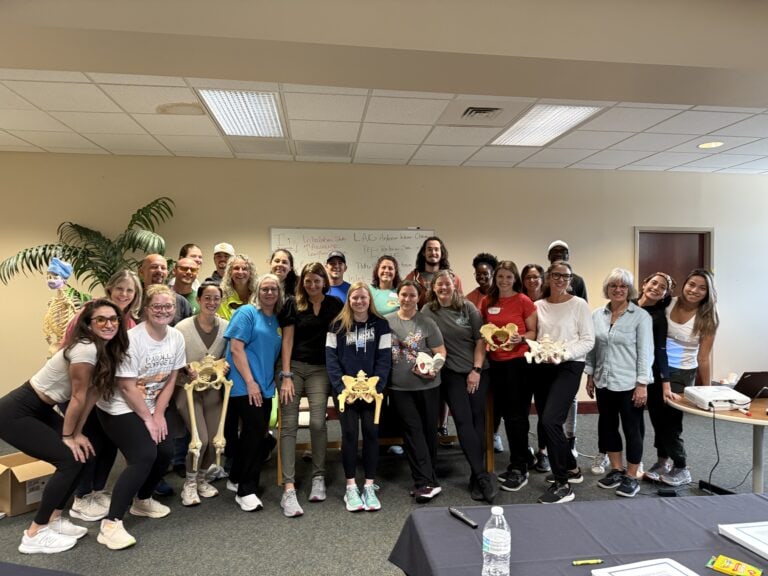
I had the pleasure of traveling to the West Coast this past weekend to teach Pelvis Restoration. This course is an amazing integrated primary course to introduce concepts of respiration that affects not only the thorax but also the pelvic floor AKA pelvis diaphragm. I was joined by my husband Chris Poulin. Chris is an Athletic Trainer and strength coach. I am always happy to have him join me, but especially to be able to answer application questions for the wellness providers in the class.
It was an awesome weekend teaching concepts of Pelvis Restoration to a diverse group of clinicians. We enjoyed discussing inlets and outlet position of the Left AIC, PEC and Patho PEC patterns. An important concept we delved into was how these neurologic patterns created compensatory movement patterns that can affect internal pressures of air and gas.

These faulty breathing patterns can result in a variety of pelvic floor conditions as well as IS dysfunction and lower back dysfunction.
It was great to see an area of our country that was so tragically affected by the wildfires beginning to heal from the devastation. Thank-you Henry Mayo staff and course attendees for making Chris and I feel so welcomed!

– Jennifer Poulin

Subscribe to our Newsletter