Welcome to the Postural Restoration Community! This is where you will read the latest industry news, hear about upcoming events, find helpful deadline reminders, and view a plethora of additional resources regarding our techniques and curriculum. The great part about it is--not only can you can view the entries we post, you can also post about the things that matter to you. Did you find an interesting article about a technique you learned in one of your courses? Do you have a patient case study you want to share with other professionals? Simply click "Submit an Entry" and follow the easy steps towards getting your information published in the PRI Community!
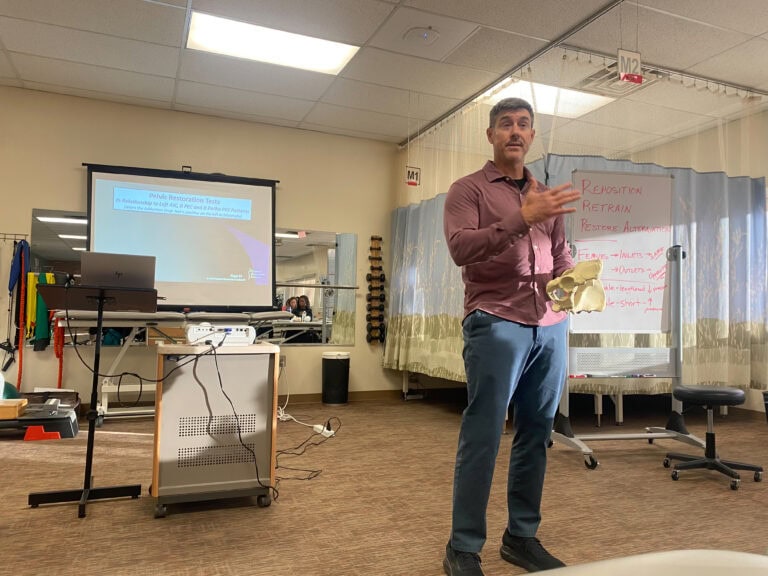
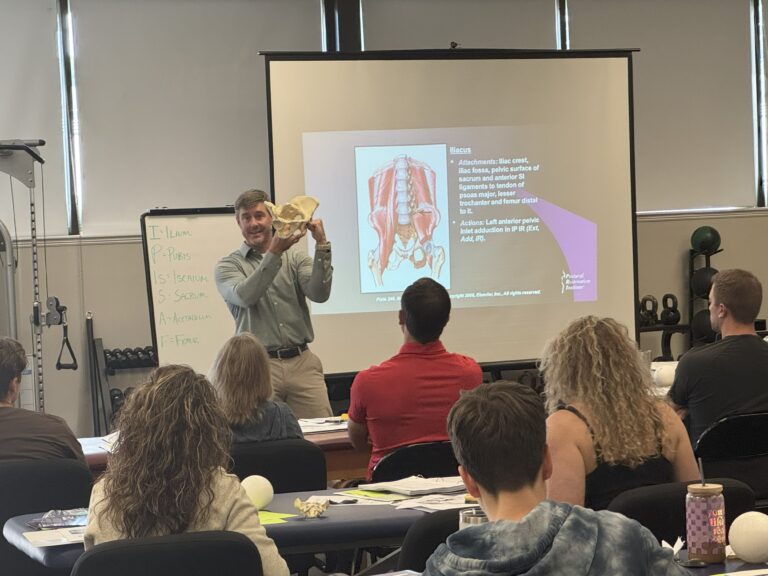
It was great to get back in the groove of teaching the science of PRI again. I had a nice break this summer, but I was eager to get back to it!
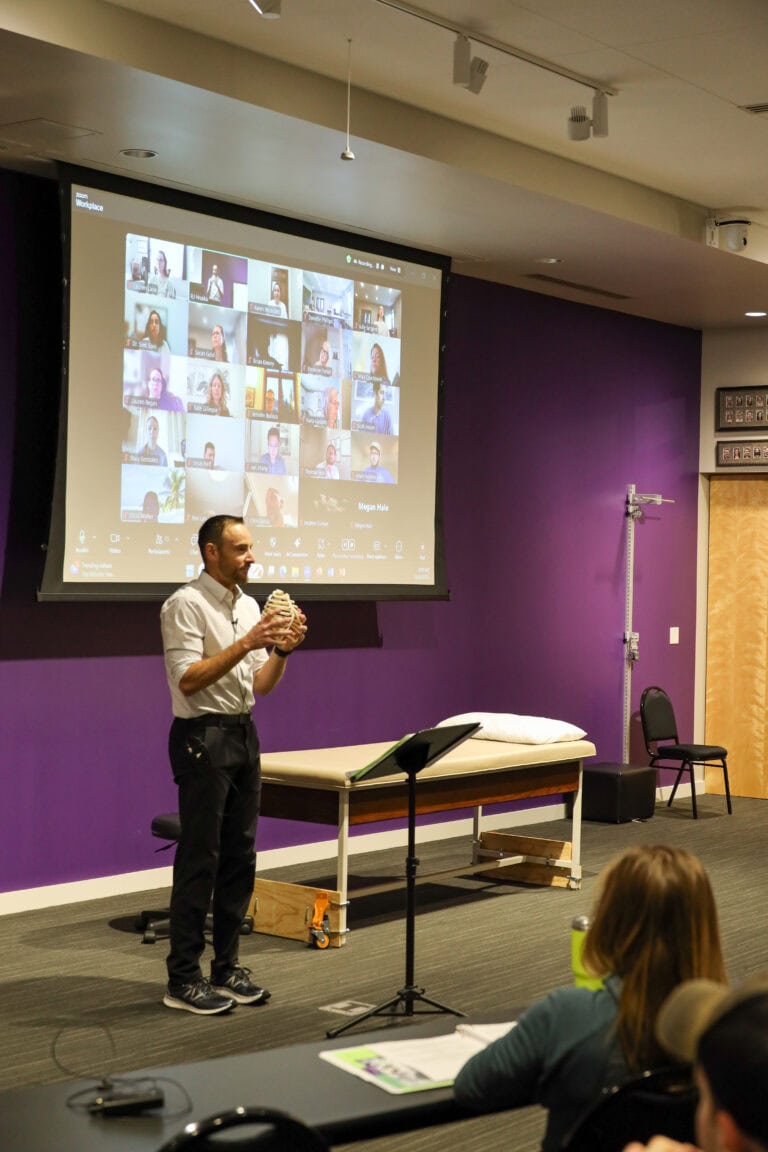
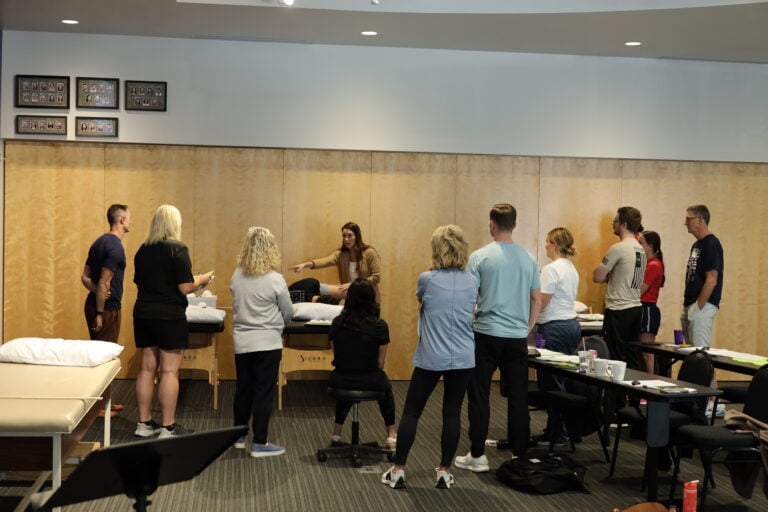
We had a great group of in-person and virtual attendees from all over the world attending Impingement and Instability. This course has really evolved over the last several years to be a heavily neurologically driven course. And it is a gateway to helping link Cervical Revolution, Cranial Restoration, FLM, Voice Box Resonation, Occlusal Cervical Restoration, and Human Evolution together as there are pieces of all of those courses in Impingement and Instability.
With so many in-person attendees, we were able to explore why using an orthopedic treatment approach to a neurologic issue is problematic, why choosing the correct reference centers influences mid-brain function, and why sensed muscle contraction does not have the same mid-brain influence as sensed pressure does. It also provided us an opportunity to debunk many misconceptions surrounding the science and performance surrounding PRI concepts and non-manual techniques.
This is a clinician’s course in that the entire objective of I&I is to provide the attendee the means to become better at applying the neurological science behind PRI by facilitating improved pressure management in several specific locations as a means of influencing mid-brain behavior. Since all decisions the brain makes is based on sensed pressure, it behooves us to help our patients and clients better their sense and management of pressure in upright positions for improved overall function.
My thanks to Jen and RJ for their production of the live stream. And my thanks to Chad Beckman, Dale Jensen, Shannon Stigall, Holly Boxterman, and Ronald Grant for their willingness to let us learn from them. It was an honor to have Dave Drummer, PRC, in attendance, as his help with explaining the use and origin of the PRI shoe list was very helpful. It was a wonderful kick-off to the fall season of PRI courses, and I look forward to seeing many of you in future PRI courses!
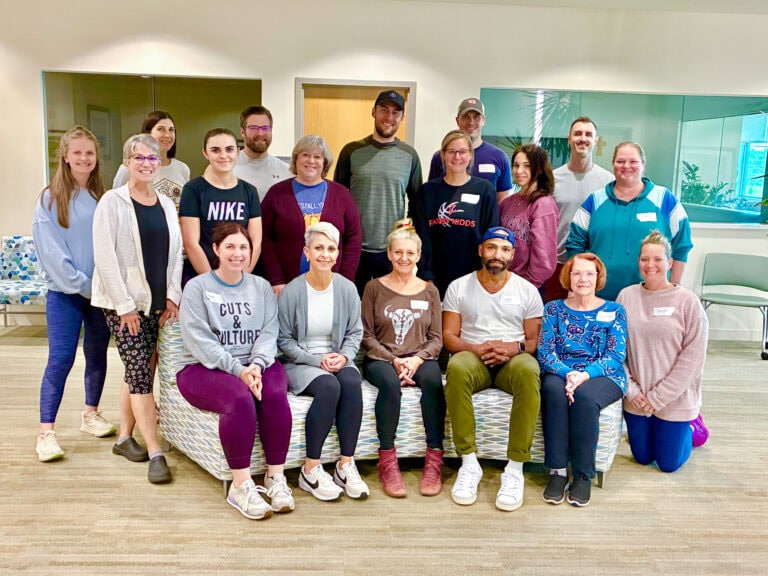
While many clinicians were spending their final weekend of summer luxuriating in pools and lakes, a curious group hailing from Washington, Pennsylvania, and Texas converged in the little town of Abilene, TX, to learn how patterned necks influence posture and movement. I loved spending time with this group and appreciated your desire to expand your PRI knowledge. If you’ve applied PRI’s primary course material, yet find that your patient-client has plateaued, it’s likely time to “go upstairs” to the neck.
At the onset, this course emphasizes the new “floor” that the human body relies on for upright negotiation of the environment: the occipital-atlanto articulation on the left and right sides. The upright bipedalism of humans is unique in the world of mammals and is directly tied to:
Transverse movement of the temporal bones
Hole control of the foramen magnum
Brainstem centric position
Sphenoid orientation
Occlusion and mastication
These areas may be under the influence of dominant chains of muscle – the L/B AIC, R/B BC, and R TMCC – that literally connect the ground to the head and can limit movement strategies and drive the cranium into positions well-described in the osteopathic literature.
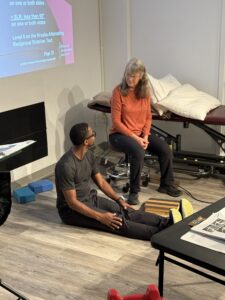
Thank you to models Adam Babb, Brian Butz, Sarika Gaikhe, Sarah Latham, and Heather McWilliams for your willingness to receive cervical tests and demonstrate techniques. The entire class experienced non-manual techniques (with a manual technique thrown into the mix) unique to this course, that incorporate the familiar and ever-important concepts of the left ground, left diaphragm ZOA, left posterior mediastinum expansion, and right low trap and triceps, with a new reference from the left molars. They enable freedom of the neck and alternation of the temporal bones for a more grounded and efficient means of negotiating the world around us. Reflecting on the PRI’s techniques, attendee Thomas Kramer stated: “PRI has changed how I want to practice: less with my hands and more towards self-empowering my patients.”
Thank you SO much Kerry Aslin, Bryan Lange, and Brooke and Jesse Rawlings for your hospitality and inviting us into your home – Abilene Sports Medicine and Orthopedics/Elite Physical Therapy. You are clearly pros at hosting!
I hope to see all of you again in a future course as you continue your PRI journey!
The Seattle area has a vibrant PRI community of practitioners expanding their PRI knowledge and application. Just east of Seattle is the community of Sammamish and I had the privilege of presenting Postural Respiration to a diverse group of physical therapists, a chiropractor, a respiratory therapist/acupuncturist, yoga instructor, and strength and conditioning personnel.
While three of the students were brand new to PRI, most of the attendees were new to Postural Respiration having taken either Pelvis Restoration or Myokinematic Restoration. The two strength and conditioning attendees are currently preparing for their PRT certification and several of the physical therapists are pelvic floor specialists that added a critical dimension of integrating the thoracic diaphragm with the pelvic diaphragm and how the synergy between both structures affect not only the pelvic floor but the entire axial skeleton.
Postural Respiration is the flagship course of this institute and the core of the core is the diaphragm and the central location of the body from which a group of muscles called polyarticular chains connect from the diaphragm to the lateral knee and on the opposite side connect through the ribcage, chest, neck to cranium. What always provides a critical understanding in this course is that walking, the diaphragm and breathing are all connected for upright human performance. How we regulate airflow into a chest wall and sense that airflow along with sensing specific places in our body is all part of an awareness of freedom of movement and breathing.
One of the students presented with a chronically stiff neck he had for years, and though we don’t treat anyone in our courses since demonstration and lab are for educational purposes only, as a side benefit he experienced nearly full freedom of movement of his neck for the first time. The connection of how respiration and achieving neutrality of a human body, connected to how we breathe, especially with accessory respiratory muscle overuse, was experiential for him and the entire group. This was just one example of the observable changes with PRI manual and non-manual techniques. Needless to say this attendee new to PRI wants to take more courses!
I want to thank Bill Fletcher for hosting Postural Respiration at G2 Sport and Physical Therapy this weekend. Bill was gracious enough to be my driver to and from the course location and providing an outstanding location that enhanced everyone’s learning process. Thank’s much to all of the students for your “spot on” questions and enthusiasm. Your questions help teach this course and guide everyone else through this process of new discovery in their journey into PRI.
Recently, I had the privilege of returning to Goldsboro NC to teach Pelvis Restoration to a familiar group of clinicians that attended my course Myokinematic of the Hip and Pelvis just last year! It is so fun for me to return to the same host site and I will hope to return in the future. Goldsboro staff are engaged in their desire to learn more about PRI and how to integrate the concepts into their diverse and often complex patient population.
In the front row was Verrelle Wyatt who came to my clinic earlier this year in April to attend the Cervical Revolution course with Skip George. Watching the Ah Ha moments he and others were having make teaching so rewarding for me! It is truly all connected. The roots of pelvis respiration and our brain patterns are evident in the patterns of LAIC, PEC and patho PEC discussed in depth in the course materials. Although this course has ALOT of content. It is set up well with algorithms and suggested techniques to help the new clinician quickly integrate PRI into their treatments.
Pelvis Restoration is an integrated introductory PRI course as we discuss the influence of respiration on the pelvic outlet, influence of inlet position and how restrictions in the thorax can influence the pelvic girdle. I love when the new course attendees see the posterior mediastinum expand during the demonstration of inlet control during the morning lab on Sunday. The power of airflow never ceases to amaze me.
The group of course attendees came from all over. I was joined by Jennifer Smart, Danielle Phillips and Kasia Galica. They all are certified in PRI and helped me help the course attendees during lab and contributed to discussions.
Shout out to my new friends Laura and Leany from Columbia, (yes the country) currently living in Orlando for their amazing VLOG of the course. I loved it and look forward to seeing them again in future courses.
Traveling to Boston to explore the science of Myokinematic Restoration was a “wicked” good time. This was the first PRI course for the majority of the attendees. We had physical therapists, physical therapy assistants, 2 physical therapy students, athletic trainers, personal trainers, strength and conditioning professionals in attendance. The enthusiasm and questions were top notch. Mike McKenney, Northeastern University head ATC, our gracious host, made sure we had everything we needed to make the course and lab especially successful.
We dove into the intricate asymmetries that influence the dominant Left AIC pattern, including the diaphragm, internal organ placement, patterned airflow and left/right brain implications.
Towards the second half of the first day we were able to confirm the presence of the L AIC pattern in all the attendees with objective testing including the infamous Hruska Adduction Drop Test.
Ending the day using the left hamstring, left IC adductor and right glute max techniques to reposition the pelvis to appreciate neutrality. Karen Taylor Soiles, PT, PRC brought a wealth of knowledge and experience to the attendees by helping with cues and positioning during lab all weekend. The second day was spent primarily in lab learning how to use the Hruska Adduction Lift Test to guide treatment by being able to assess the ability to “find and feel” the appropriate muscles at each level. The group then did several techniques reflective of each level of the Hruska Adduction lift score and inhibition techniques to experience the power of PRI!
McPhee Physical Therapy is a small, outpatient clinic in Anacortes, WA currently looking for PRI trained or curious providers. Our mission is to provide high quality, innovative care with focus on the whole person.
Flexible work hours, competitive salary and benefits, and access to amazing outdoor activities from boating or paddling in the San Juan islands to skiing, hiking and climbing in the Cascade or Olympic mountains, as well as abundant mountain biking trails, and a temperate coastal climate make this an ideal opportunity for achieving the elusive work-life balance.
Please contact Malcolm McPhee with questions or to schedule a phone interview.
I had such a great time with everyone at University of the Incarnate Word just outside of San Antonio, Texas. Reid, Joanna, and the rest of the UIW staff really demonstrated amazing Texas hospitality with a perfect setting for a PRI course. My hope is that they regularly welcome us back to their neck of the woods.
“Interdisciplinary” is the top word that comes to mind when summarizing the course this past weekend. I really think the rib cage represents the “core” of interdisciplinary intervention. It is an area of our bodies that manages pressure throughout our body. It is an area that can be influenced by patterned respiration, thus affecting posture of the right and left halves of our body. It is an area of the body that needs to be better understood when working with dentists, optometrists, ENTS, SLPs, coaches, psychiatrists, podiatrists, and many others.
The course itself was very interdisciplinary and included physical therapists, athletic trainers, psychiatrists, massage therapists, coaches, a chiropractor, and a breathwork specialist.
Interdisciplinary thinking was especially exciting being a month after PRI’s Interdisciplinary Studies Summit. Getting to know the interdisciplinary-minded practitioners this past weekend made me excited for the future of healthcare, and even more excited for the future of PRI.
Special thanks and shout out to Reid and Joanna and the rest of UIW staff for being fantastic hosts. Thank you all who attended, I truly had a fantastic time spending the weekend with all of your interdisciplinary minds.
On April 24-25, 2025 we celebrated our 25th year as an institute by welcoming 13 speakers to present their “stories” to a crowd of healers, explorers, dancers, musicians, artists and friends. These are the things that define us, not the schools of thought you come from but the way you think and live. The audience for this years Interdisciplinary Studies Summit included a vast array of disciplines, all with different belief systems, coming together to study the role of asymmetry on the human body. But what became evident on day 1 of the Summit was that we would be exploring much more then just the body this year. Diving into the auditory effects of a downbeat, emotional intelligence, cortical dominance, self healing, and the importance of grounded-ness and much more, not only for others needing help but also for the well being of ourselves.
The speaker presentations and their flow, could not have gone better as they continued building on each other throughout the two days. And thankfully no tornadoes caused any threat to our Summit this year. Thank you to everyone who helped celebrate and converse with us, ensuring the success of another Summit. Especially to those who shared their stories by presenting on topics they are passionate about!
We cant wait to see everyone next year on April 23-24th, 2026!
Congratulations to Louise Kelley, DPT, PRC and Frank Mallon, PT, DPT, PRC for receiving the PRI Directors Dedication Award as part of our 2025 Annual Interdisciplinary Studies Summit!
This year we not only celebrated our 25th year as an institute but also the accomplishments of individuals like these. Their kindness and humility in learning, teaching and implementing the science of Postural Restoration is truly a gift to us all!
The PRI Directors Dedication Award was established in 2012 to recognize individuals’ ongoing dedication to their advancement in PRI. To date, we have presented this award to 25 individuals and an award recognition plaque, which is pictured above, is displayed at the Postural Restoration Institute® in Lincoln, Nebraska, recognizing each of the PRI Directors Dedication Award recipients.
Louise Kelley is a Physical Therapist in North Bethesda, Maryland. Louise received her Master of Science in Physical Therapy in 1989 from the Emory University School of Medicine and, later in her career, her Doctor of Physical Therapy from Evidence in Motion Institute of Health Professions. Early in her career, she worked in inpatient rehab with patients following stroke, amputation, and spinal cord injury. She has worked for the majority of her career in a wide variety of outpatient settings in the Washington, DC, area, ranging from spinal rehab to women’s health, chronic pain, and sports performance. Louise has always been drawn to methodologies that recognize the interconnectedness of the human body and believes that no other approach so thoroughly examines and addresses this concept as PRI. Louise has introduced the PRI paradigm not only to her patients but to numerous athletic teams and clubs involved in road racing, track, basketball, diving, volleyball, rugby, dance, and tennis. Louise started her PRI journey in 2007 at a Myokinematic Restoration course in Lancaster, Pennsylvania, and in 2011, she completed PRC credentialing.
In 2016, we approached Louise to join the PRI faculty and she began training to teach Postural Respiration; and a short time later, in 2021, she began training to teach Cervical Revolution.
After working for several years in a variety of diverse outpatient practices, Louise opened her own private practice, Kelley PT, in 2017, allowing her the flexibility to treat the way she wants to treat, without a single specialization, and outside of a volume-driven practice. Starting her own private practice has also allowed her to begin building an interdisciplinary team of providers for her patients.
Louise’s attention to detail and desire to understand PRI concepts at the deepest level have aided her ability to disseminate the science of PRI for students in her courses. She strives for perfection, leaves no stone unturned, and keeps her fellow colleagues and faculty on their toes, making sure that concepts are accurately and consistently delivered.
Louise is a humble life-long learner, evident by her desire to pursue her DPT later in her career, as well as her interests in a variety of modalities, research and writing. She presented at the 2021 AAPMD Collaboration Cures conference, and her presentation was titled “Connecting Ground Sense and the Airway Through Arm Swing”.
Frank Mallon is a Physical Therapist in the greater Philadelphia area. Frank received his Bachelor’s degree in Exercise & Sport Science from Ursinus College and his Doctorate in Physical Therapy from Arcadia University. In 2013, Frank took his first PRI course after being inspired to do so from his colleague and mentor Carl Mangione. Just two years later, in 2015, Frank completed PRC credentialing, however that was just the start of his journey as a PRI credentialed physical therapist.
Like many within our community, Frank at one point needed integrative care for himself, and found himself seeking that out through the PRIME Program at the Hruska Clinic. This experience solidified his desire to be able to offer similar services for patients in his area. Over time, Frank began building an Integrative team of professionals within the fields of dentistry, optometry, and other modalities to build a network of integrative care in his own backyard. This style of interdisciplinary care, would eventually lead him to start his private practice, Renaissance Physical Therapy, to be able to offer services and incorporate integrative care in a more meaningful way.
Frank has successfully built a solid, integrative interdisciplinary team, and he works closely on-site each week with a neuro-optometrist and numerous dentists for the delivery of Postural-Visual and Dental Integration collaborative care.
Frank has assisted on the PRC Review Committee for several years, and I cannot thank him enough for his continued passion and desire to help others, including aspiring PRC clinicians, continue to learn and grow, through honest, genuine and instrumental clinical and personal feedback provided to applicants over the years.
Those of us that have gotten to know Frank well, know that he is one of the most genuine, kind and humble individuals on Earth. At PRI, we have many times referenced our desire to live out the Tim McGraw hit from 2016, “Humble and Kind”. And, Frank is an individual that comes to mind when we hear that song come on in the office.
We are so honored to present the PRI Directors Award to Frank and Louise. Congratulations!
I had the distinct pleasure of furthering my Pelvis Restoration faculty training at the home field in Lincoln, NE under the tutelage of the Pelvis course GOAT, Lori Thomsen. Lori has not only been teaching this material since the pelvis course started, but was a primary influence on the content and focus of this course.
We had a great group of in person and live stream attendees with excellent questions that drove clarity and connections around the “foundation of our building”, the pelvic ring.
We did our best to appreciate that the pelvic position acronyms, while at times daunting, are just explaining a tri-planar position of the inlet and outlet. Through testing of femoral and costal motion we gained insight into pelvic positioning and pattern status. The relationships between the femur, ribs, and the pelvis epitomize the integrated and integral nature of the course content.
While Lori battled the remnants of a cold that stole her voice by the end of the course, her commitment to this material has never weakened. I am humbled and excited to get the opportunity to carry the torch in the future, my respect for this material has never been greater or deeper.
I would especially like to thank Ann Simsar, DPT from the Hruska Clinic for attending and providing clarity and insight throughout, especially in regards to clinical application.
As James Taylor sang, Carolina was in everyone’s mind this past weekend and “there ain’t no doubt in no one’s mind” that Break Through Physical Therapy was the ideal location to host Cervical Revolution. This may have been one of the most energizing and clinically energized courses I have ever taught. Having Jen Poulin, DPT, PRC, Chris Poulin, ATC, PRT, and Lisa Mangino, DPT, PRC in attendance brought a level of clinical dialogue and expertise to one of the highest levels in an integrative setting that can be achieved in a course.
Jen and Lisa are PRI faculty members and the discussion ranged from the Human Evolution course taught by Lisa and developmental aspects in children to the Pelvis, Myokin and Postural Respiration courses that Jen has taught and how all of these primary and secondary courses connect to the cervical spine, cranium, and occlusal system. Chris has such a wide background in athletics and performance and since there were several strength and conditioning personal in attendance, the need for freedom of the cervical spine especially with rotational “power” sports like golf, baseball, and basketball was a critical topic.
The fundamentals of this course start at atlas and occipital bone in a flexion position driven by the muscles of the Temporal Mandibular Cervical Chain. The are eight muscles in this chain that stabilize the neck, cranium and jaw, and when balanced, work together and in harmony to maintain upright balance and position without the overuse of one side of these muscles especially with chewing food. Since we are all asymmetrical human beings that have to manage gravity and upright movement, the right TMCC becomes dominant and overtime and an over-reliance creates compensations throughout the entire skeleton. This course is an introduction to “top down” dominant influences that ultimately create stress and strain in the cranial, occlusal and visual systems and are considered pathologic if left untreated.
From one articulation, the atlas and occipital bone, not only is the brain stem directly influenced but the entire cranial and occlusal system is directed and positioned as well. This course integrates many professional disciplines including physical therapy, chiropractic, osteopathy and dentistry with an emphasis on the stomatognathic system as it relates to the skeletal system.
Having Jen, Chris, and Lisa as seasoned PRI clinicians during lab was one large clinical discussion with everyone in the course engaged and involved with application of these secondary course objectives. I want to thank Chris and Jen for providing their facility, time, and clinical experience in making this weekend one of the best Cervical Revolutions yet! Thank you Lisa Mangino for attending and asking many questions, with Jen as well, that helped to direct and clarify so many topics in this course so that the rest of the students could “rest and digest” critical topics and understand them. Thank you Steven Blair, DPT, CSCS, PRC for your questions and clarifications for so many topics including the Standing Alternating Cervical Cranial Expansion technique. Your precision and description helped move this course along in a most needed and helpful way. Thank you Janie from Breakthrough for helping start the days with set up. And thank you to every student from the chiropractic, physical therapy, dentistry, and strength and conditioning professions for taking time out of your busy lives to attend Cervical Revolution!
What is this Human Evolution course all about? Well, it’s not just about treating pediatrics, but it is about treating the human in front of you with consideration of where that human has been and the experiences they have had. This secondary level course focuses on “developmentally – informed therapy” aimed at assiting with integration of sensory processing that may have been missed to optimize your treatment outcomes in patients of all ages.
In this course we tackle 3 specific sections:
1. The PRI Developmental Sensory Motor Sequence (PRDSMS) that we hope every human has an opportunity to experience and how a patient might present over time if they don’t.
2. The PRI research-based Principles that support the 10 components in the PRDSMS and our focus on the development of sensory processing.
And 3. The 7 distinct but integrated PRI Developmental Processes that we cross-reference with the sensory motor manifestations/ movement and postural patterns we see in all patients.
Neurologically wired patterns start early, thanks to Functional Cortical Dominance, experience, patterned sense and behavior, which is good, until it’s not. We all adapt to the multitude of challenges we face during growth and development, be they physical, environmental, and psychological. Humans positionally accommodate to these patterns as they are able, until those accomodations no longer suffice for a grounded sense of safety, and then they turn into more permanent compensations, which can cause biomechanical and neurologically patterned pain and dysfunction over time. Understanding this process, what causes it, how to interrupt it at any age, and how significant the compensations can be will help you achieve neutrality and re-pattern your patients for optimal outcomes.
Thirty-four folks from 15 US States and 6 countries via live stream, joined 5 folks in person for rich discussions in this recent offering of the Human evolution course and here’s what they had to say:
“Many of my patients have chronic pain. Usually throughout the course of treatment, they will share various childhood experiences with me. It’s quite fascinating that some of the PRI positions will trigger these memories that they are compelled to share. I will now be able to make better connections between past experiences and where they are now and use this information to select PRI techniques.”
“I love having exercises that now have a play aspect with them. Getting young ones to do PRI exercises and having fun”
“I will definitely look at my adult clients through a different lens. I loved the daily activities that people could do to improve their senatorial awareness.”
“I love Lisa’s enthusiasm about this course. You can tell that she really cares about her clients and her work and that was evident in her presentations and her videos.”
“I plan to integrate these concepts and techniques into my practice with both adults and children.”
“It was such an insightful course. I will be taking it again and recommending it.”