Community News

Welcome to the Postural Restoration Community! This is where you will read the latest industry news, hear about upcoming events, find helpful deadline reminders, and view a plethora of additional resources regarding our techniques and curriculum. The great part about it is--not only can you can view the entries we post, you can also post about the things that matter to you. Did you find an interesting article about a technique you learned in one of your courses? Do you have a patient case study you want to share with other professionals? Simply click "Submit an Entry" and follow the easy steps towards getting your information published in the PRI Community!

Select Date

Beginner’s mind, a concept that has its origins in Zen Buddhism, encourages a mental state of curiosity and openness, like someone learning the new and novel. Shunryu Suzuki wrote “In the beginner’s mind there are many possibilities; in the experts mind there are few”.

A beginner has to be curious, but also open to new perspectives and ideas. As I am beginning to teach the Pelvis Restoration course, I endeavor to present the information in a way that stays aware of the learner who is hearing it for the first time. One of the challenges to receiving the content is that we all have paradigms and ideas that can come in conflict with the integrated concepts of respiration, pelvic position, and neuromotor patterning.

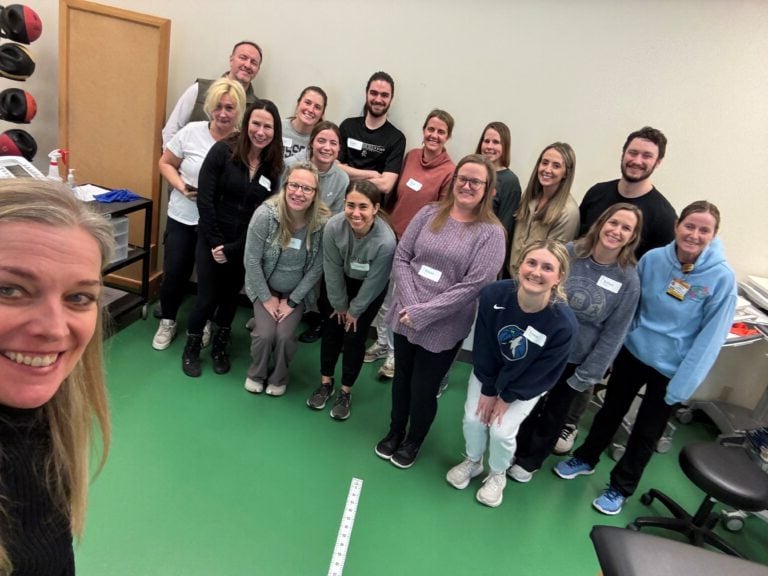
This past weekend I had the pleasure of teaching Pelvis Restoration to a group of attendees that did an excellent job of maintaining “beginner’s mind”. There was a diverse group of clinicians and strength and conditioning professionals in attendance who asked questions that helped me as an instructor know what was landing and start to build a bridge from the classroom to the “real world”.

We were all fortunate to have the Pelvis course GOAT in the room, Lori Thomsen, who has been a great mentor to me and example of avoiding the traps of “experts mind”. A big thank you to all the individuals from Central Mass PT, who not only did an excellent job of hosting the course, but had an impressive 14 attendees!
It was a fun and challenging weekend, much gratitude to all who attended and made the course possible.

– Jason Miller

Rochester was simply delightful this past weekend and I really got to experience “Minnesota Nice” first hand with a very fun class.

Melanie and the rest of the EA Therapeutic staff were very welcoming and terrific hosts. They have a top notch facility and even better staff.

We had 9 clinicians brand new to the PRI science and they picked up on the material very quickly. This was Derek’s third PRI course and he was able to integrate concepts from Postural and Pelvis well to complete the trifecta of primary course work.

Xi came all the way from China to dive into PRI, taking his second course in as many weeks. This was Molly’s second PRI course, but first course while not in a post-shoulder surgery haze. Molly and her friend Leah brought the questions, fists, and laughs from the front row.

Melanie and Lori were fantastic hosts with stellar questions and comments from their experience working with a variety of clients and patients. Thanks for the cupcakes as well! They have a super star team with Justin, Cynthia, Rio, and Ryan. Thanks for taking me to the best local restaurant in Rochester for lunch. Justin, best of luck at the Minnesota Marathon next weekend!

Meggy brought a fantastic chiropractic background to the group and was a perfect representative of a pelvis in the swing phase on both sides of the body. Amanda had a very varied background of clinical practice, including visceral manipulation, which her new PRI knowledge will complement nicely.

By the afternoon on Sunday we all had a new perspective on position, patterns, posture, and the ability to shift between the left and right sides of the body. I sure had a great time and am doing my best to bring “Minnesota Nice” back home with me!

– Craig Depperschmidt

There’s something about Maine in the fall… especially the early fall, when the leaves are beginning to transition to return to the earth, after a short life in the sun, rain, winds, and storms, eventually falling to becoming organic matter to nurture other living organisms once again. It’s a corollary to the evolution of the human, who is experiencing challenges and weathering big and little storms of life across the lifespan. The highs and the lows (especially the lows) are both so important for growth and development and an evolution that really never stops.

I was honored to be in front of a live audience again in the spacious setting of Coastal Ortho in Brunswick, ME for another offering of the flagship Human Evolution course. We had enriching intellectual discussions about the unending development of the human in the context of acquisition of motor skills and movement patterns of varying levels of potential; sometimes, the best the human could muster (in the face of cerebral palsy) and others who excelled without as much external support, both with PRI focused intervention. It all comes down to sense. No matter the level of cortical and cerebellar processing, humans show us what they sense by their movement patterns. Dissecting these patterns of movement and sense is what this course is all about, fortifying treatment choices.

As all things evolve, we’ve taken this course to a higher level, offering not one, but 2 contrasting adult cases to demonstrate the applicability of developmentally informed intervention with a plethora of pearls and treatment guidance that are applicable to patients of all ages in your clinic on Monday.

A big THANK YOU to Brian Bisson, Kelly Bisson, Patrick Nelson, and Beth Carlton (also Emily for the Flight Deck pizza suggestion!) for being gracious hosts, making everyone feel comfortable and providing a enjoyable learning environment. Things could not have gone better. Sure hope to see more of you in the future!
Thanks again, Coastal Ortho! It was a distinct pleasure!

– Lisa Mangino

One of my favorite courses to teach for PRI is Postural Respiration. This course helps establish the neurological background for how and why the concepts of PRI are effective. It was a wonderful weekend exploring the science of PRI and inescapable functional cortical pre-dominance that governs our neuromechanical and respiratory behavior.

We were able to explore the necessity and the wealth of information supporting the necessity of a zone of apposition and how that helps one inhibit their dominant pattern. One of the enormous benefits of attending an in-person PRI course is the ability to participate in the labs. We were able to work through the nine tests presented in this course, as related to the position and function of the pelvis and thorax. The primary focus of this course is sensed airflow, and how that changes and affects not only the respiratory system, but also the GI system, emotions, forward locomotion, the ANS, and spinal orientation.

We were fortunate to have wonderful lab sessions, and I greatly appreciate the willingness the entire group had to participate in all of the labs. Even during the breaks, participants were working on the manual and non-manual techniques from the labs. It was a rewarding experience, from a speaker’s perspective, to see how willing the attendees were during the labs. This group had wonderful and numerous questions, which is also one of the huge benefits of attending an in-person course.

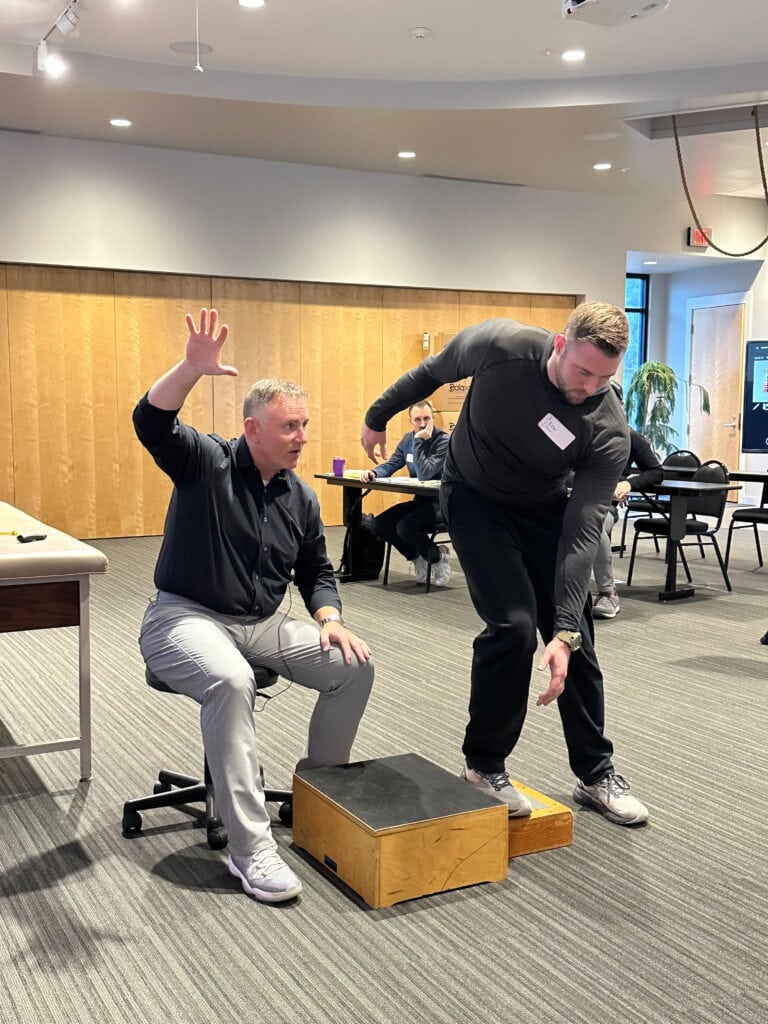
My thanks to Loc Rao and TJ DiPrima for all of their help during labs. And a huge thank you to Wyatt Keith, Brandon Partovy, Ed Fuchs, Nick Usaj, and Tara O’Brien for allowing us to learn from them during demonstrations. With a mixture of MD, PA, DC, PT, PTA, CPT, and mental health professionals, we were blessed with a diverse mixture of expertise and movement specialists. Thank you all for your willing participation and making the experience as rewarding as it was for all involved, including myself. Looking forward to seeing you all in future PRI courses!

One of the most positive qualities of video technology is the opportunity to bring people from many countries, cultures and professional disciplines together for a common purpose to learn and grow professionally and even personally. Last weekend was such an experience with a diverse group of healthcare professionals from eleven countries, Asia, North America, and Europe coming together to experience Cervical Revolution. I always marvel at the dedication of not only the students in the live audience, some of whom traveled as far away as from Australia, Canada, and the West and East Coast of America, but the students that stay up in the middle of the night in their own time zone to attend a PRI course via Zoom!

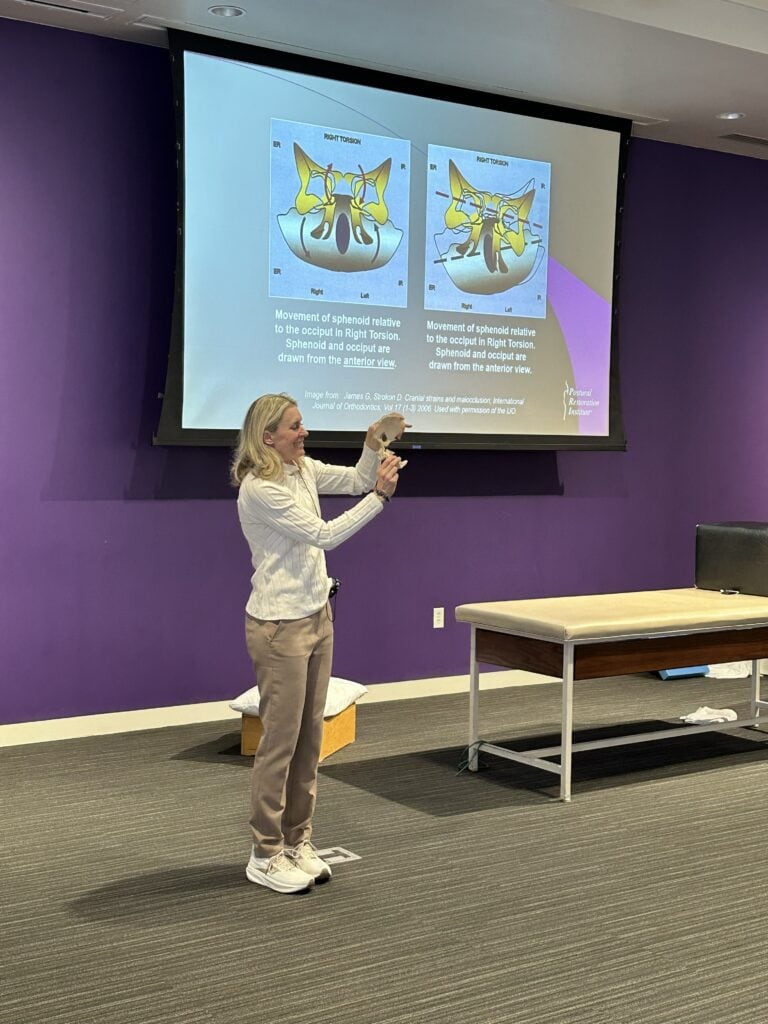
Cervical Revolution is a course that integrates the cervical spine, cranium, and the beginning concepts of occlusion and its relationship to the entire body or stomatognathic system. This is a course that emphasizes arthrokinematic position and movement starting with the atlas and occipital bone and how that position driven through the Right TMCC pattern of eight muscles bilaterally is a consequence of neurology starting with left functional cortical dominance. The A/O articulation is considered highly neurologic because of it’s relationship to the brainstem and sensitivity to movement and pressure. In this course we touch upon the relationship of not only the brainstem but the amygdala, midbrain, thalamus, hypothalamus, ventricles, and olivary neurons as a starting spot of drivers of upright human existence and forward motor locomotion which is really an evolutionary topic. The need for tri-planer movement, alternation, and bilateral pressure sense management makes Cervical Revolution not only an Impingement and Instability course for the cervical spine and cranium, but is an introduction to the neurological aspects of the tertiary courses like Cranial Resolution, Voice Box Resonation, Cervical Occlusal Restoration and Forward Locomotor Movement.

In this course we had PT’s, DC’s, DDS’s, Orthodontists, Myofunctional Therapists, Osteopaths, an MD from Ireland, Strength and Conditioning Specialists, Soft Tissue Manual Therapists that attended from all over the world. As a faculty member I am always humbled by the dedication of students who spend two days, or two full nights, engaged and asking questions to help the entire group understand Cervical Revolution. One of the questions and restates was how does the entire kinetic chain connect and respond to the cervical spine. In this course we consider it a “right stance” course of the neck and the neck responds to the Left AIC, Right BC, and Right TMCC. As with every course, one of our goals is to restore alternation to the entire system via inhibition of dominate patterns driven by functional cortical dominance. In a brief description, 30-30-30 is the mantra for Cervical Revolution as that reminds us of the need to restore tri-planer alternating movement of the cervical spine.

Thank you all for you focused energy and interest over the two days we spent together and I hope you were all as inspired as I was to help facilitate your PRI Journey! And lastly I would like to thank RJ Hruska for facilitating the entire weekend getting to the institute early and leaving late to make sure everyone was well fed, had a microphone when asking questions, and made the powerpoint work perfectly for everyone in attendance.  RJ’s presence always makes for a totally  positive learning and teaching experience!

– Skip George

Myokinematic Restoration ventured south to the great state of Georgia this past weekend, hosted by the longstanding supporter and promoter of PRI, the Cantrell Center. While Georgia was well represented, we also had attendees from Tennessee, Virginia, and as far north as Massachusetts and Rhode Island.

I brought a bit of Montana flavor by way of New Jersey to the group and we discussed the infamous “Jersey Left”. You see, in the state of NJ, the roads can be quite busy, so in order to make a left turn you frequently have to navigate a Jersey jughandle, going past your intended destination on the left side of the road, getting off the road on the right and wrapping back around to the left via an intersection.

You can go left in Jersey, but you do need a plan, which is why this analogy lines up well with our asymmetric human patterning. The extra work necessary to make left turns in Jersey is synonymous with the intention necessary for the asymmetric human body to achieve an appropriate left centered stance position.

At the end of day one we were fortunate to have Josiah Johnson to serve as our L AIC patterned human as we explored the PRI activities that repositioned his pelvis. Adhering to our test, intervene, retest mantra, his tests following repositioning activities showed us that his pelvis was now neutral with his trunk rotation, straight leg raise, and hip rotation now more symmetric.

On day two we were reminded that neutrality is just moving through the intersection of the “Jersey jughandle”, and we need to use the Hruska Adduction Lift Test to identify the ingredients we needed to truly get into the left lane. Henley Cook helped us stay on point during the HAddLT, exclaiming “FAIL!” when we couldn’t find the mid stance or mid swing components to achieve the next score. In reality it was anything but a “FAIL”, as the lift test gave us the answer to what was holding us back.

The weekend was great fun from my perspective, the attendees remained interested and engaged, no easy task when most of the audience is in their first PRI course. The crew from the host site, our “Cantrellians”, Tassie, Sunshine, Dina, Cristina, and Carson ensured we had all we needed for a great learning environment. A big thank you to the Cantrell Center crew for hosting!

– Jason Miller

Written By: Joan Hanson – joan.hanson@sanfordhealth.org

Sanford Physical Therapy Solutions is expanding! We are a PRI certified clinic. We are doubling our space. We would like to add 3 PRI trained PT’s who then also specialize in women’s health, neurological disorders and then someone who is also willing to work with bariatric patients. We will then be able to cover most diagnoses between the 8 of us. If you are looking to work in a clinic with like minded physical therapists, we would love to talk with you.

Here is the link for the positions:

Sanford PT Solutions – Postural Restoration Institute

Here is our webpage address:

https://www.sanfordhealth.org/locations/sanford-pt-solutions

Feel free to reach out to me as well with questions: joan.hanson@sanfordhealth.org


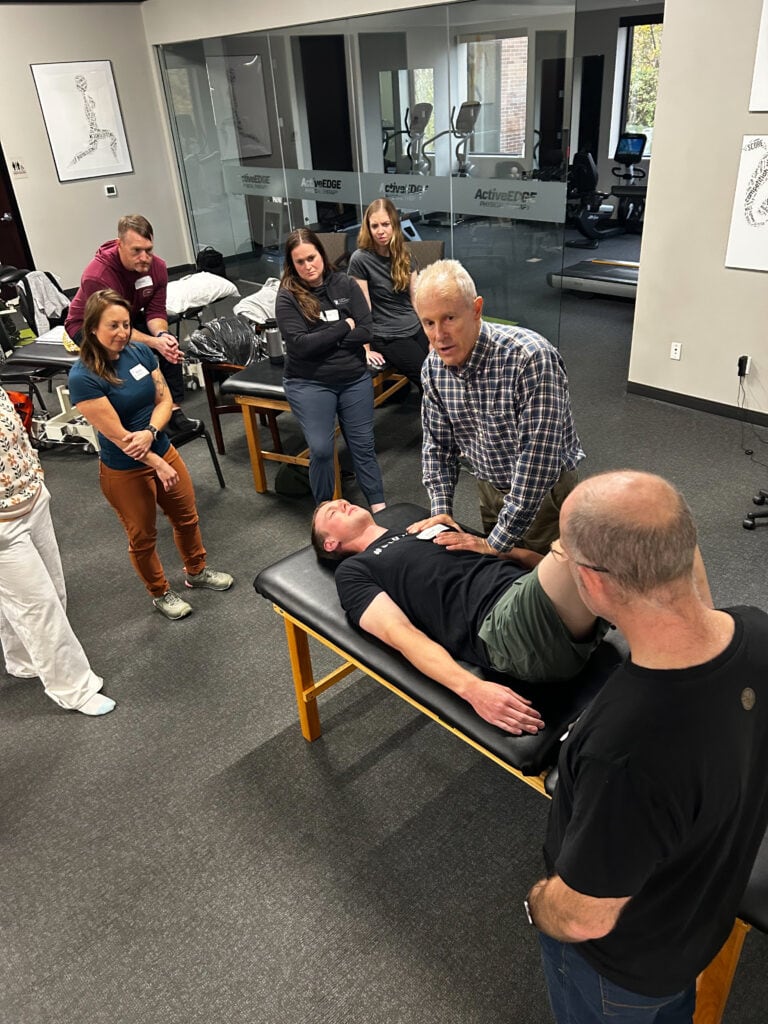
This past weekend, I had the pleasure of returning to the Big Apple to teach Pelvis Restoration at Finish Line Physical Therapy. Having taught here many times over the years, it truly feels like my clinic home away from home.

New York City consistently attracts a wonderfully diverse group of students—both in backgrounds and perspectives. I was fortunate to be joined by my husband, Chris Poulin, ATC, CSCS, PRT, and Andrew, Xenophontos CSCS, PRT, as lab assistants. Their insights and varied clinical experiences brought tremendous value to the lab sessions, highlighting different approaches to client care and training.

The Pelvis Restoration course was recently updated to provide a more streamlined experience for both students and instructors. This allowed me to deliver the didactic content more concisely on Saturday morning, and then build on the concepts of inlet and outlet frontal plane control through testing and repositioning labs in the afternoon.

Sunday began with an exploration of Pelvis Respiration as it relates to internal pressure management and myofunctional relationships. In the afternoon, we dove into treatment algorithms including Patho PEC (instability within a pattern), PEC, and Left AIC. This section also featured an additional breakout demonstration and hands-on practice, which was well received.

Notably, 50% of the class were first-time attendees. One new participant shared that the material felt very digestible, which is always encouraging to hear.

As one of PRI’s three introductory courses, Pelvis Restoration helps students understand how habitual patterning impacts pelvic floor conditions—ranging from pelvic floor dysfunctions and IS joint issues to pubalgia and lower back pain. We explored both common and less common compensatory strategies, recognizing that while we are all neuromuscularly inclined toward patterns, how we individually compensate can vary greatly.

A heartfelt thank you to Maile, Ryan & Alexis at Finish Line Physical Therapy for welcoming us once again and continuing to support PRI education year after year. Your hospitality and commitment are deeply appreciated.

– Jennifer Poulin

Staff Physical Therapist 

  • About Us

All Systems Health was founded with the vision of creating a deeply integrated health and human movement system—one that transcends traditional healthcare and transforms people’s lives. Our mission is to enhance human health through movement and uniting disciplines aimed at addressing root causes.  

By combining the knowledge of multiple professions, we deliver interventions that turn complex science into precise solutions. The Movement Department is advancing the integration of physical therapy with vision, audiology, dentistry, and sleep medicine to create a universal movement system where real-world application is more predictable, reliable, and repeatable.  

At All Systems Health, we are dedicated to real patient outcomes and offer a rare opportunity to join an unadvertised practice in Silicon Valley CA.

  • Reports To: Senior/Lead Physical Therapist  
  • Employment Type: Full-time
  • Purpose of Position 
    • To execute All Systems Health PT assessments, interpret standardized test results, educate patients, deliver foundational exercise progressions and coaching, and support patient recovery using manual therapy. Staff PTs are expected to refer complex cases to Senior/Lead PTs when appropriate.  
  • Key Responsibilities 
    • Treat patients 4-5 days/wk (maximum of 7 patients/day) using foundational All Systems Health PT protocols, including structured assessments, interpretation of results, delivery of PT exercises, patient coaching, and manual therapy.  
    • Create exercise videos to contribute to an internal PT exercise library.  
    • Research and filter scientific information to construct a movement theory and assessment testing manual.  
    • Maintain accurate, timely documentation in compliance with All Systems Health data standards.  
    • Promptly refer cases outside skillset to Senior/Lead PTs.  
  • Requirements 
    • PT degree from an accredited program. 
    • PT license in CA. 
    • BLS/CPR certification. 


It was great to get back in the groove of teaching the science of PRI again. I had a nice break this summer, but I was eager to get back to it!

We had a great group of in-person and virtual attendees from all over the world attending Impingement and Instability. This course has really evolved over the last several years to be a heavily neurologically driven course. And it is a gateway to helping link Cervical Revolution, Cranial Restoration, FLM, Voice Box Resonation, Occlusal Cervical Restoration, and Human Evolution together as there are pieces of all of those courses in Impingement and Instability.

With so many in-person attendees, we were able to explore why using an orthopedic treatment approach to a neurologic issue is problematic, why choosing the correct reference centers influences mid-brain function, and why sensed muscle contraction does not have the same mid-brain influence as sensed pressure does. It also provided us an opportunity to debunk many misconceptions surrounding the science and performance surrounding PRI concepts and non-manual techniques.

This is a clinician’s course in that the entire objective of I&I is to provide the attendee the means to become better at applying the neurological science behind PRI by facilitating improved pressure management in several specific locations as a means of influencing mid-brain behavior. Since all decisions the brain makes is based on sensed pressure, it behooves us to help our patients and clients better their sense and management of pressure in upright positions for improved overall function.

My thanks to Jen and RJ for their production of the live stream. And my thanks to Chad Beckman, Dale Jensen, Shannon Stigall, Holly Boxterman, and Ronald Grant for their willingness to let us learn from them. It was an honor to have Dave Drummer, PRC, in attendance, as his help with explaining the use and origin of the PRI shoe list was very helpful. It was a wonderful kick-off to the fall season of PRI courses, and I look forward to seeing many of you in future PRI courses!

-Dan Houglum

While many clinicians were spending their final weekend of summer luxuriating in pools and lakes, a curious group hailing from Washington, Pennsylvania, and Texas converged in the little town of Abilene, TX, to learn how patterned necks influence posture and movement. I loved spending time with this group and appreciated your desire to expand your PRI knowledge. If you’ve applied PRI’s primary course material, yet find that your patient-client has plateaued, it’s likely time to “go upstairs” to the neck.

At the onset, this course emphasizes the new “floor” that the human body relies on for upright negotiation of the environment: the occipital-atlanto articulation on the left and right sides. The upright bipedalism of humans is unique in the world of mammals and is directly tied to:

Transverse movement of the temporal bones
Hole control of the foramen magnum
Brainstem centric position
Sphenoid orientation
Occlusion and mastication

These areas may be under the influence of dominant chains of muscle – the L/B AIC, R/B BC, and R TMCC – that literally connect the ground to the head and can limit movement strategies and drive the cranium into positions well-described in the osteopathic literature.

Thank you to models Adam Babb, Brian Butz, Sarika Gaikhe, Sarah Latham, and Heather McWilliams for your willingness to receive cervical tests and demonstrate techniques. The entire class experienced non-manual techniques (with a manual technique thrown into the mix) unique to this course, that incorporate the familiar and ever-important concepts of the left ground, left diaphragm ZOA, left posterior mediastinum expansion, and right low trap and triceps, with a new reference from the left molars. They enable freedom of the neck and alternation of the temporal bones for a more grounded and efficient means of negotiating the world around us. Reflecting on the PRI’s techniques, attendee Thomas Kramer stated: “PRI has changed how I want to practice: less with my hands and more towards self-empowering my patients.”

Thank you SO much Kerry Aslin, Bryan Lange, and Brooke and Jesse Rawlings for your hospitality and inviting us into your home – Abilene Sports Medicine and Orthopedics/Elite Physical Therapy. You are clearly pros at hosting!

I hope to see all of you again in a future course as you continue your PRI journey!

– Louise Kelley

The Seattle area has a vibrant PRI community of practitioners expanding their PRI knowledge and application. Just east of Seattle is the community of Sammamish and I had the privilege of presenting Postural Respiration to a diverse group of physical therapists, a chiropractor, a respiratory therapist/acupuncturist, yoga instructor, and strength and conditioning personnel.

While three of the students were brand new to PRI, most of the attendees were new to Postural Respiration having taken either Pelvis Restoration or Myokinematic Restoration. The two strength and conditioning attendees are currently preparing for their PRT certification and several of the physical therapists are pelvic floor specialists that added a critical dimension of integrating the thoracic diaphragm with the pelvic diaphragm and how the synergy between both structures affect not only the pelvic floor but the entire axial skeleton.

Postural Respiration is the flagship course of this institute and the core of the core is the diaphragm and the central location of the body from which a group of muscles called polyarticular chains connect from the diaphragm to the lateral knee and on the opposite side connect through the ribcage, chest, neck to cranium. What always provides a critical understanding in this course is that walking, the diaphragm and breathing are all connected for upright human performance. How we regulate airflow into a chest wall and sense that airflow along with sensing specific places in our body is all part of an awareness of freedom of movement and breathing.

One of the students presented with a chronically stiff neck he had for years, and though we don’t treat anyone in our courses since demonstration and lab are for educational purposes only, as a side benefit he experienced nearly full freedom of movement of his neck for the first time. The connection of how respiration and achieving neutrality of a human body, connected to how we breathe, especially with accessory respiratory muscle overuse, was experiential for him and the entire group. This was just one example of the observable changes with PRI manual and non-manual techniques. Needless to say this attendee new to PRI wants to take more courses!

I want to thank Bill Fletcher for hosting Postural Respiration at G2 Sport and Physical Therapy this weekend. Bill was gracious enough to be my driver to and from the course location and providing an outstanding location that enhanced everyone’s learning process. Thank’s much to all of the students for your “spot on” questions and enthusiasm. Your questions help teach this course and guide everyone else through this process of new discovery in their journey into PRI.

– Skip George

Subscribe to our Newsletter